How to Tell Your Skin Type at Home
Many people choose skincare routines by guessing. One person decides they have “oily skin” because their nose gets shiny. Another decides they have “dry skin” because their face feels tight after washing. Both may be partly right, and both may be misreading a temporary signal.
Understanding your skin’s general tendencies can help you make calmer, better-informed decisions about cleansing, moisturizing, and sun protection. It will not solve every skin concern, and no home method is perfect. But a careful, repeated observation can tell you far more than a single glance in the mirror.
This guide explains what skin type really means, walks you through safe at-home observation methods, shows you how to interpret mixed results, and tells you when to see a professional.
Quick answer: To tell your skin type at home, gently cleanse your face with a mild cleanser you already use, pat dry, and leave it bare for about an hour while noting shine, tightness, and flaking in each facial area (forehead, nose, cheeks, chin). Repeat over several ordinary days. Shine in most areas suggests oily skin; roughness or flaking suggests dry skin; shine mainly in the T-zone suggests combination skin; and consistent comfort suggests normal or balanced skin. Repeated stinging, burning, or redness points to sensitivity, which can overlap with any type. These are practical clues, not a diagnosis.
What Is Skin Type?
Skin type is a general way of describing how your skin tends to behave: how much surface oil it produces, how comfortable it feels, and how easily it reacts. It is a useful starting point, not a permanent or complete description.
Sebum: your skin’s natural oil
Sebum is the oily substance made by sebaceous glands, which sit in the skin next to hair follicles. Sebum helps keep the skin surface supple and contributes to its protective film. Sebaceous glands are most numerous on the face and scalp, which is why the forehead and nose often look shinier than other areas. How much sebum a person produces varies with genetics, hormones, and age.
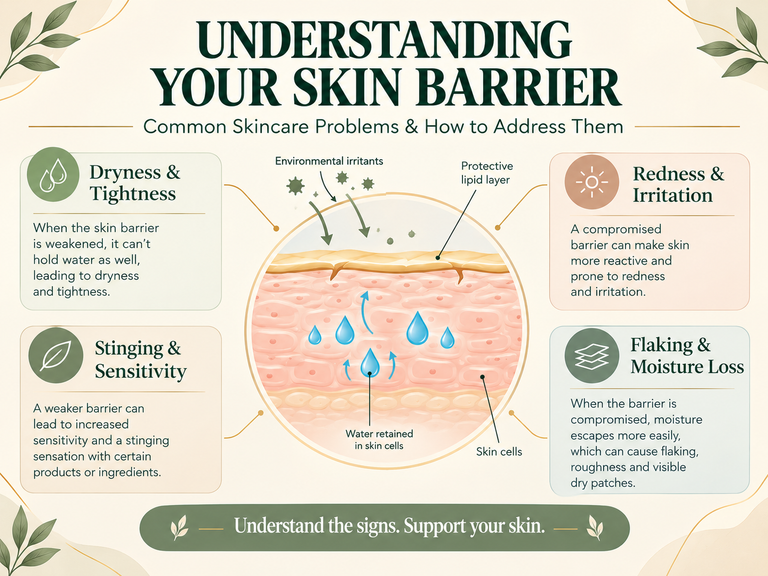
The skin barrier: keeping water in and irritants out
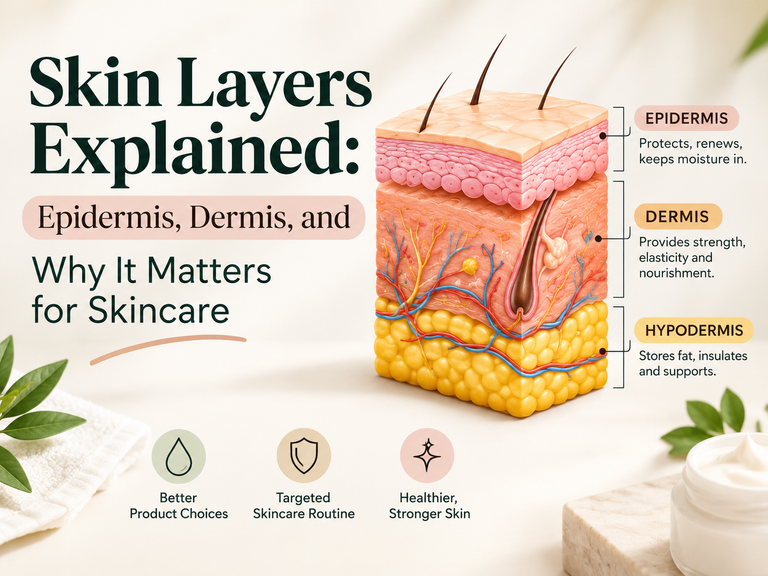
The outermost layer of the skin, the stratum corneum, works as a barrier. It helps limit water loss from the skin and protects against external irritants. Think of it as a wall of cells held together by natural fats. When this barrier is working well, skin generally feels comfortable. When it is disturbed, for example by very harsh cleansing, skin can feel tight, stingy, or rough.
Oil and water are not the same thing.
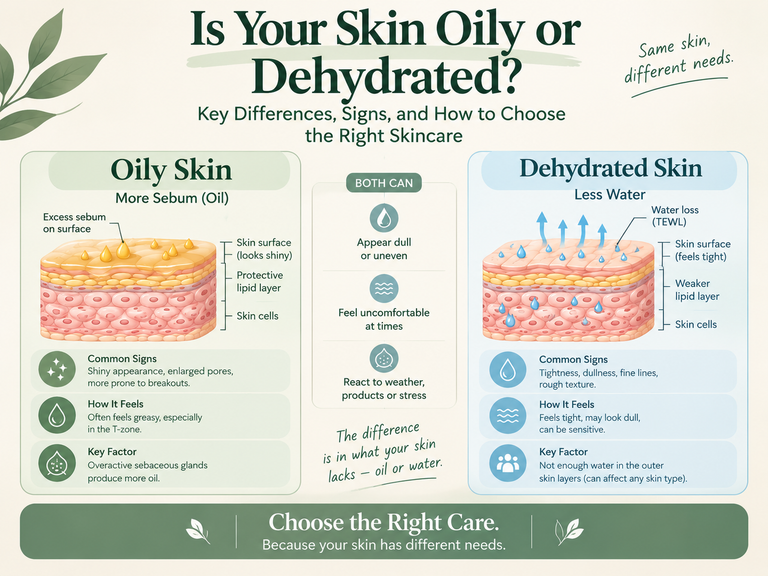
This is the single most important idea in this article: oil production and moisture level are related but different. Oil (sebum) sits on the surface. Water content describes how much moisture is held in the outer skin layers. A person can produce a lot of oil and still have skin that is low in water, and a person with low oil can have well-hydrated skin. Keeping these two ideas separate prevents many mistakes.
What influences how your skin looks and feels
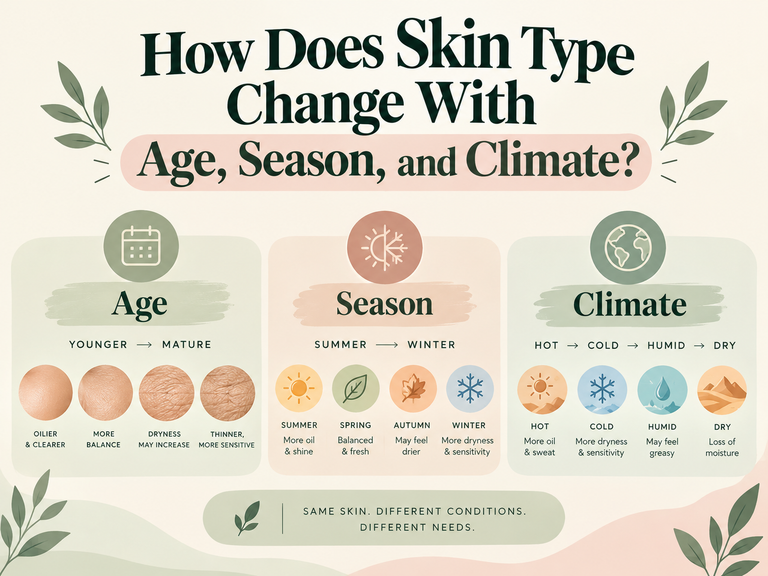
Genetics, age, hormones, climate, humidity, indoor heating and air conditioning, cleansing habits, and the products you use can all change how your skin behaves. That is why skin type is best treated as a tendency that can shift, not a fixed label.
The Five Common Skin Types
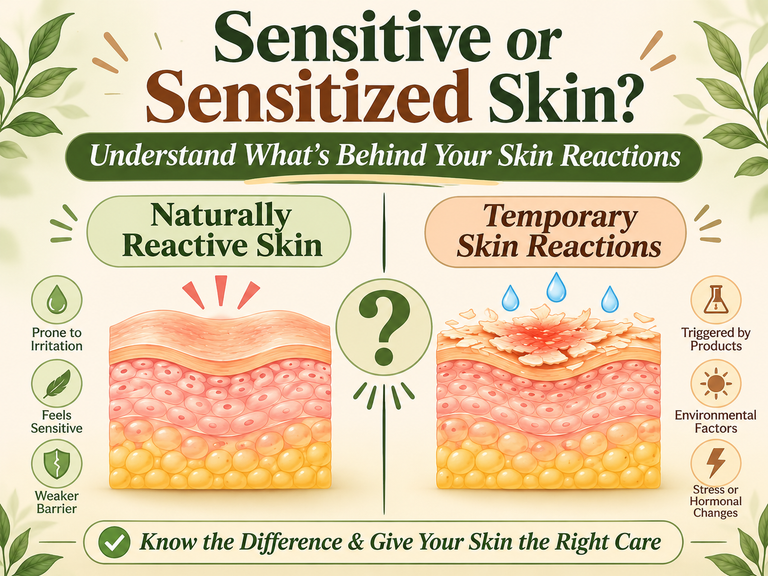
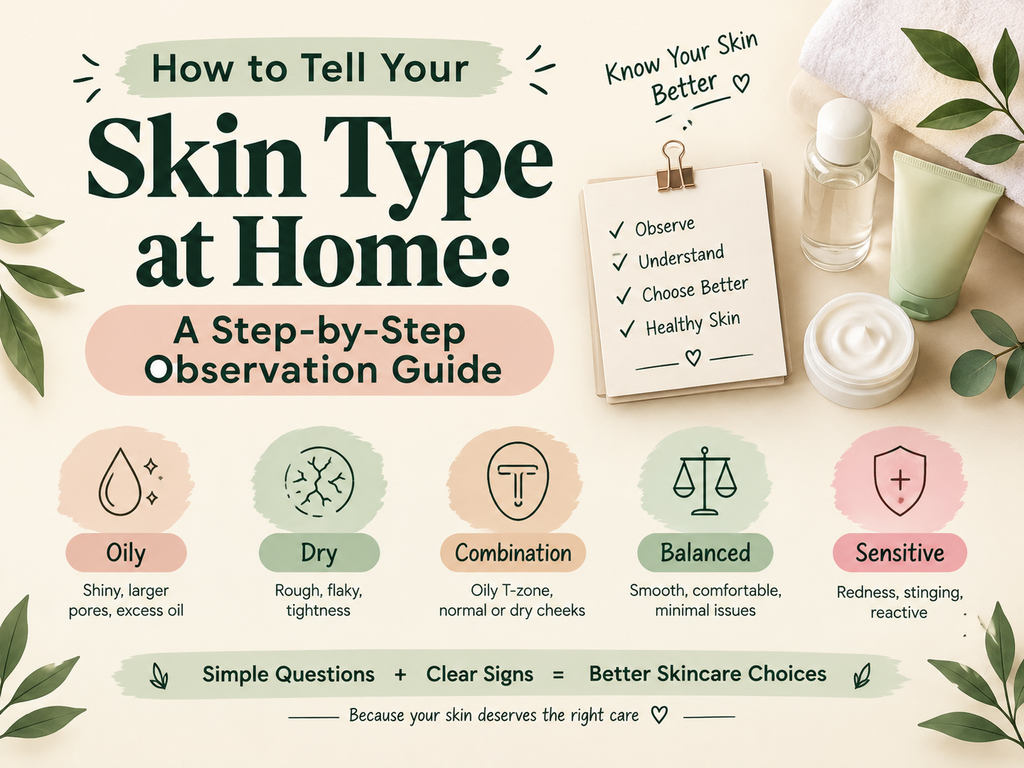
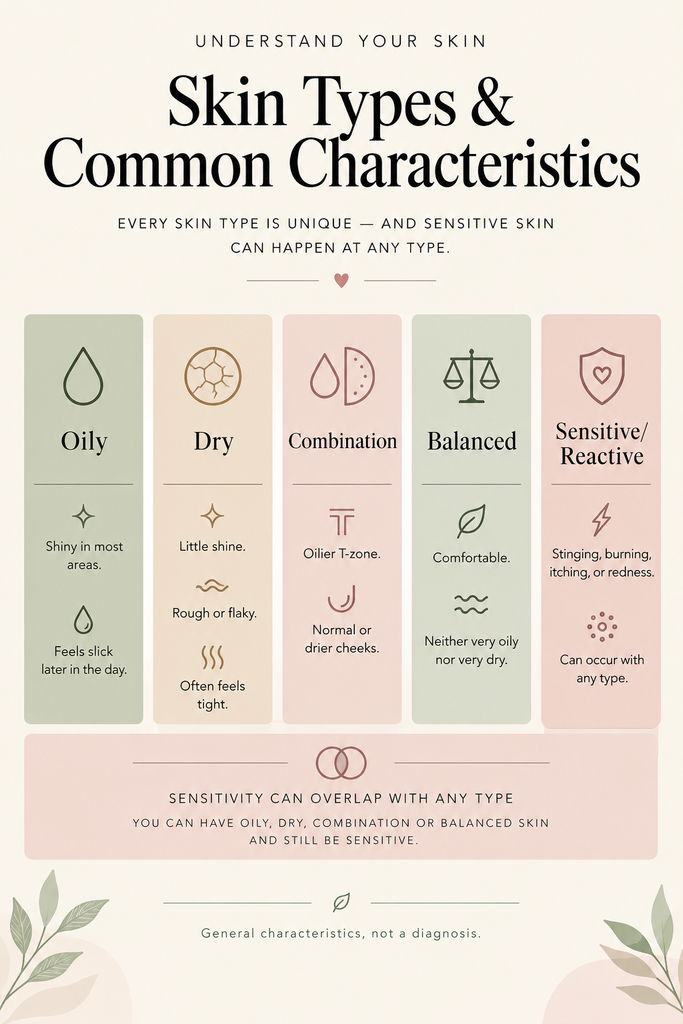
The five labels below are the ones most readers meet. One important note first: sensitivity is not an oil category. “Oily,” “dry,” “combination,” and “normal” describe oil and comfort patterns. Sensitive (or reactive) skin describes how easily the skin responds to things like products or weather with stinging, burning, itching, or redness. A person can have, for example, oily and sensitive skin or dry and sensitive skin. So the five types are not strictly mutually exclusive.
1. Oily skin
- Common signs: Visible shine across much of the face, often within hours of cleansing; skin that feels slick or thick by afternoon.
- How it feels: Rarely tight; makeup or sunscreen may seem to slide or look greasy.
- Pattern: Shine usually appears on the forehead, nose, and chin, and often the cheeks too.
- Misconception: “Oily skin does not need moisturizer.” Oily skin can still lose water, and skipping hydration is a common mistake.
- Care basics: Gentle cleansing, lightweight moisturization, daily sun protection, and avoiding over-washing.
- Other explanations: Humid weather, heavy products, or skin that was stripped by harsh cleansing and is now overcompensating in appearance can mimic oiliness.
2. Dry skin
- Common signs: Rough texture, visible flaking, dullness, and little to no shine, even hours after cleansing.
- How it feels: Tight or scratchy, often worse after washing or in cold, dry air.
- Pattern: Often affects the cheeks and body most, but can be widespread.
- Misconception: “Tight skin always means dry skin.” Tightness can also come from dehydration or irritation.
- Care basics: Mild, non-stripping cleansing, regular moisturization, and sun protection.
- Other explanations: Weather, hot showers, harsh cleansers, or skin conditions such as eczema can produce similar roughness and flaking, which is a reason to see a professional if it persists.
3. Combination skin
- Common signs: An oilier T-zone (forehead, nose, chin) with normal or drier cheeks.
- How it feels: Different areas feel different; cheeks may feel comfortable or tight while the nose looks shiny.
- Misconception: “Combination skin needs two completely different routines.” Many people simply adjust product texture or amount by area.
- Other explanations: Temporary dryness from a new product can make normal skin look like combination skin.
4. Normal or balanced skin
- Common signs: Neither noticeably oily nor dry; comfortable most of the day; few visible reactions.
- Misconception: “Normal means perfect.” Balanced skin can still get breakouts, sun damage, or seasonal changes.
- Care basics: Keep it simple: gentle cleansing, moisturizer as needed, and sunscreen.
5. Sensitive or easily reactive skin
- Common signs: Repeated stinging, burning, tingling, itching, or redness in response to products, weather, or other triggers.
- Key point: Researchers describe sensitive skin mainly by these unpleasant sensations rather than by visible signs alone, and it can occur on any underlying skin type.
- Misconception: “Sensitive skin is the same as dry skin.” It is not; oily skin can be sensitive too.
- Care basics: Fewer products, fragrance-free options where tolerated, patch testing, and avoiding aggressive exfoliation.
- Other explanations: A temporarily damaged barrier (from over-exfoliation, for example) can feel like sensitivity but may improve once the skin is treated gently. Persistent symptoms deserve professional advice.
Key takeaway: Ask two separate questions: How oily is my skin? And how comfortable and tolerant is it? The answers together describe your skin better than a single label.
How to Tell Your Skin Type at Home: Step-by-Step Tests
These methods cost nothing (or almost nothing) and are safe when done gently. Treat them as observation tools. They cannot diagnose a skin condition or give a laboratory-grade measurement.
Test 1: The bare-face observation
What to do
- Wash your hands, then gently cleanse your face with a mild cleanser you already use and tolerate well.
- Pat your face dry with a clean towel. Do not rub.
- If comfortable, avoid leave-on products for the observation period. If your skin becomes uncomfortable, stop and apply your usual gentle moisturizer. Comfort comes first.
- Note how your skin feels right away.
- Recheck at about 30 minutes and again at about 60 minutes.
- Record shine, tightness, visible flaking, and differences between the forehead, nose, cheeks, and chin.
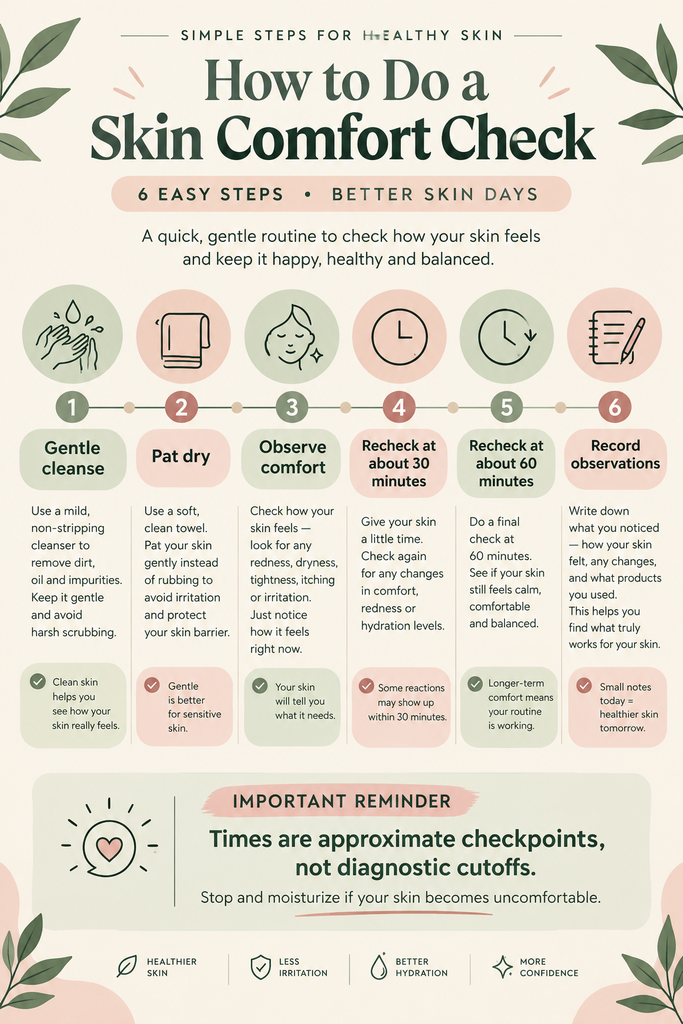
What to observe: Shine (where and how much), tightness, roughness or flaking, and any stinging or redness.
How to interpret it: Shine appearing in several areas suggests oilier tendencies. Tightness and visible flaking with little shine suggest drier tendencies. Shine mainly on the T-zone suggests combination tendencies. Feeling comfortable with no strong shine or dryness suggests balance.
What it cannot tell you: It cannot measure hydration, identify a medical condition, or prove a permanent type.
What can distort the result: The 30- and 60-minute marks are practical checkpoints, not scientifically validated cutoffs. Your cleanser, the weather, indoor air, stress, hormones, and your usual routine can all change what you see.
Test 2: The blotting-paper clue (optional)
What to do: Several hours into a normal day (or at your 60-minute check), press a clean blotting sheet gently against the forehead, nose, cheek, and chin, using a fresh area or sheet for each. Do not rub or drag.
What to observe: How much oil each sheet picks up and where the marks are heaviest.
How to interpret it: Heavy marks from the forehead and nose with light marks from the cheeks fit a combination pattern. Heavy marks everywhere fit oilier tendencies. Very little oil everywhere is consistent with drier or balanced tendencies.
What it cannot tell you: It gives only a rough picture of surface oil. It does not measure hydration, barrier health, or sensitivity.
What can distort the result: sunscreen, moisturizer, makeup, sweat, humidity, and pressing too hard.
Skin-Type Observation Table
Use this as a general reference. No one fits every box in a column.
| Observation | Oily | Dry | Combination | Normal/Balanced | Possible Sensitivity |
| Shine during the day | Noticeable in most areas | Little or none | Mainly forehead, nose, chin | Mild or occasional | Not defined by shine; any type can be sensitive |
| Feeling after cleansing | Comfortable or quickly oily | Often tight | Cheeks tight, T-zone comfortable | Comfortable | May sting or feel hot |
| Flaking or roughness | Uncommon | Common | Possible on cheeks | Uncommon | Possible if irritated |
| T-zone vs cheeks | Both fairly oily | Both fairly dry | Clear difference | Little difference | Not a deciding factor |
| Reaction to new products | Variable | Variable | Variable | Usually tolerant | Repeated stinging, itching, or redness |
| What it can and cannot tell you | Suggests oil tendency; not hydration | Suggests low-oil tendency; not a diagnosis | Suggests zone differences; not fixed | Suggests balance; not “perfect” skin | Suggests reactivity; cannot name the cause |
Key takeaway: Look for patterns across several rows rather than relying on one.
Dry Skin vs Dehydrated Skin: The Most Important Difference
People use these words interchangeably, but they describe different things.
- Dry skin is a skin type usually associated with lower oil (sebum) production.
- Dehydrated skin describes a condition in which the outer skin layers hold less water than they should. It can happen to any skin type, including oily skin.
| Feature | Dry skin (low oil) | Dehydrated skin (low water) |
| What is lacking | Oil | Water |
| Applies to | Skin type (a long-term tendency) | A condition that can come and go |
| Can occur with oily skin? | No, by definition low oil. | Yes. |
| Common signs | Rough, flaky, little shine | Tight, dull, fine lines look more obvious; they may still look shiny. |
| Common contributors | Genetics, age, cold or dry climate | Harsh cleansing, low humidity, heating or air conditioning, irritation, sun exposure |
| Helpful approach | Gentle cleansing and consistent moisturizing | Gentle cleansing, hydrating and barrier-supportive care, reducing irritants |
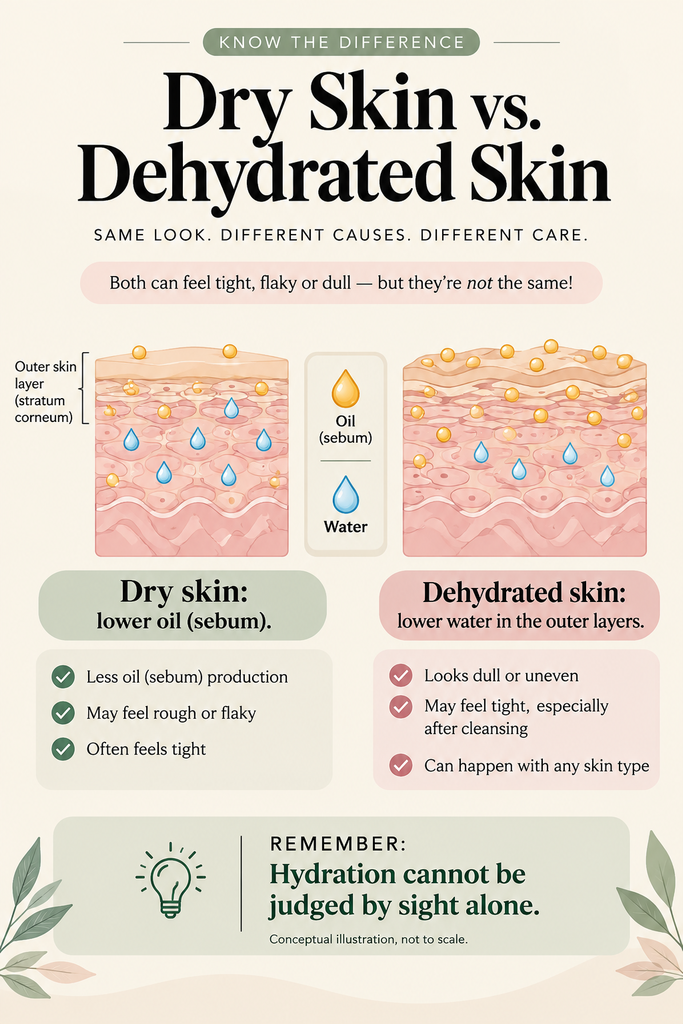
Why tightness alone cannot decide: Tightness appears in both dry and dehydrated skin and can also result from irritation or a harsh cleanser. These signs overlap, and you cannot confirm the cause just by looking at your face. If your skin looks shiny but feels tight, that is a clue to consider dehydration or irritation rather than assuming a type.
How to Recognize Combination Skin Correctly
Combination skin follows a common pattern: a shinier forehead, nose, and chin, with cheeks that are normal or drier. It happens because sebaceous glands are not distributed or active equally across the face.
Because the zones behave differently, one routine may feel perfect on the cheeks and too heavy (or too light) on the T-zone. Observing each zone separately is the fix.
| Area | Typical combination pattern | What to note |
| Forehead | Shine within hours | Time shines appears. |
| Nose | Often the shiniest area | Shine and visible oil on blotting paper |
| Chin | Often shiny | Shine, and whether breakouts occur |
| Cheeks | Normal or tighter, possibly flaky | Tightness, flaking, comfort |
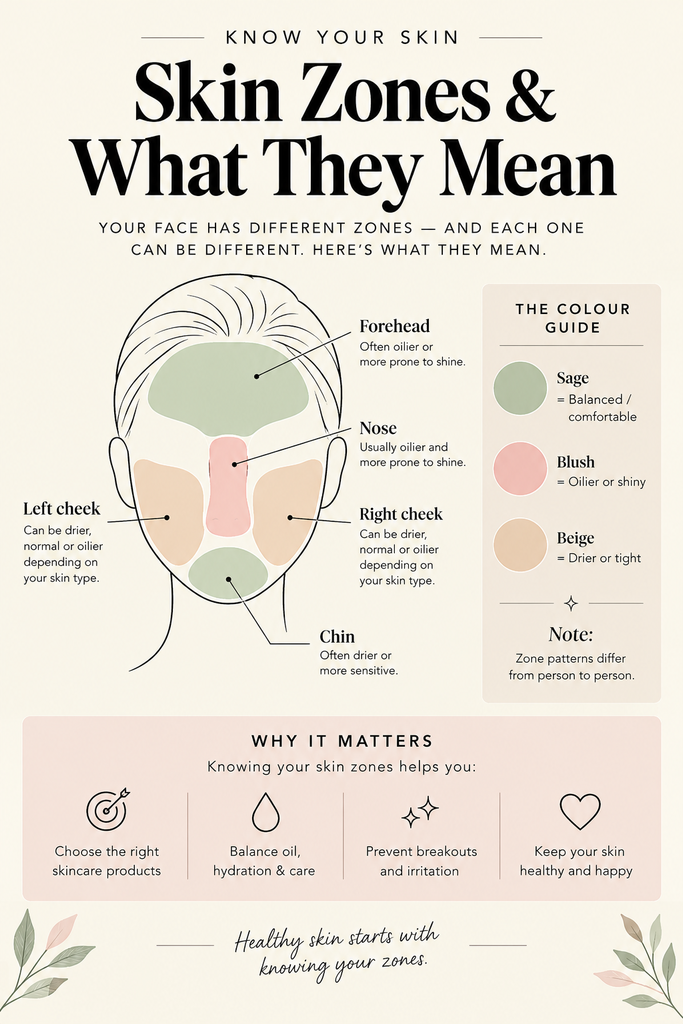
Do not label it a combination too quickly. Temporary dryness or irritation on the cheeks from a new product or cold weather can look like combination skin. Observe over several days before deciding. Also remember that not everyone has the same zone pattern.
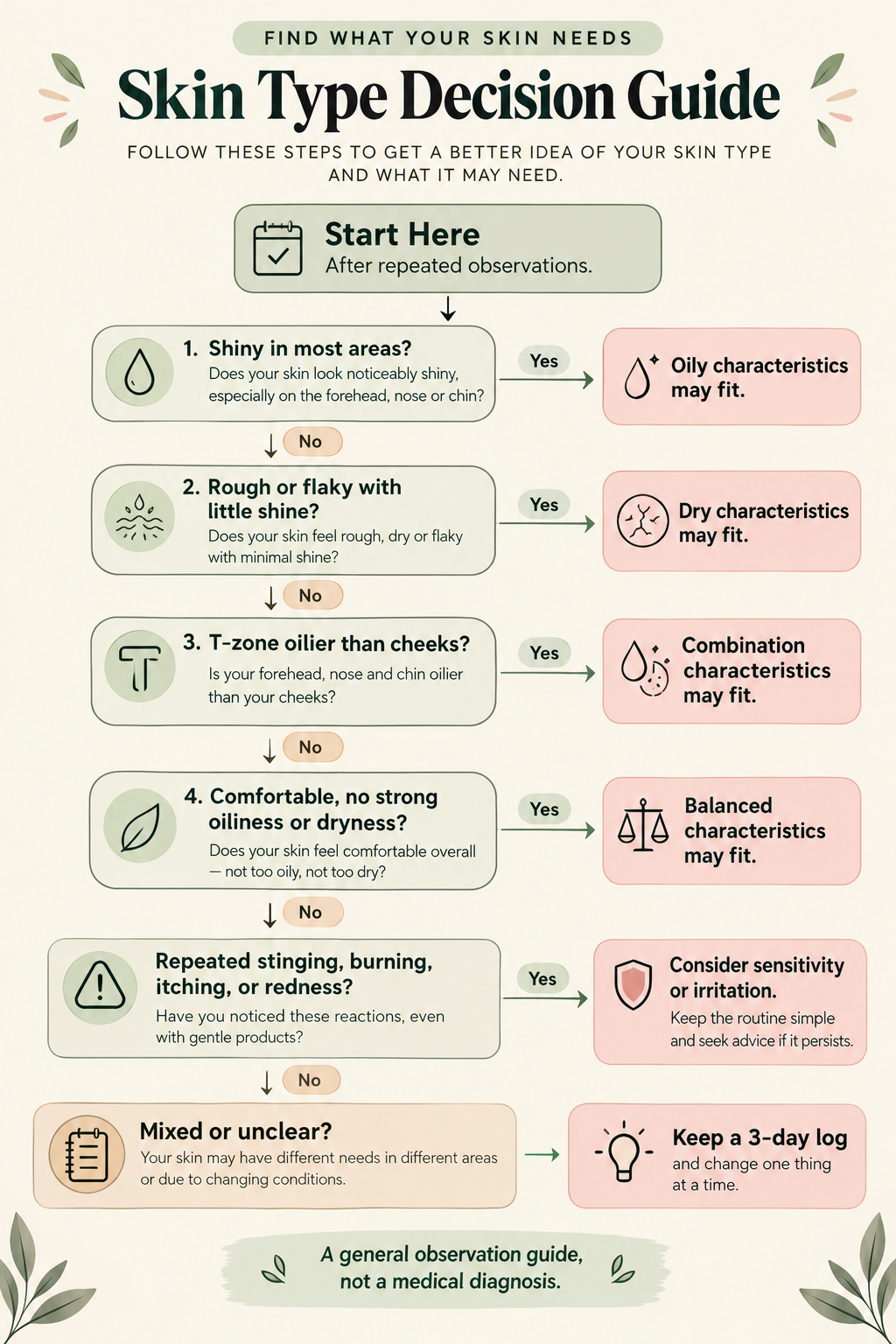
A Skin-Type Decision Guide
Use this after you have repeated your observations. It is a general observation guide, not a medical algorithm.
- Is shine noticeable across most of your face? If yes, oily characteristics may fit.
- Is the skin repeatedly rough or flaky with little shine? If yes, dry characteristics may fit.
- Is the T-zone clearly oilier than the cheeks? If yes, consider combination skin.
- Does the skin feel comfortable without strong oiliness or dryness? If yes, it may fit the normal/balanced category.
- Do you repeatedly get burning, stinging, itching, or redness? If yes, think about sensitivity or irritation as a separate layer rather than assuming a type.
- Are results mixed or unclear? That is common. Keep a log for a few more days, simplify your routine, and avoid changing several things at once.
Less Obvious Insights That Make Skin-Type Checks More Useful
These are practical strategies, not established clinical techniques. Their value is in helping you notice patterns calmly.
1. The Two-Question Method
Evaluate two things separately: (a) how much surface oil your skin tends to produce, and (b) how comfortable and resilient it feels. Someone shiny and uncomfortable may have dehydration or irritation, not simply “oily skin.” Someone who is not shiny and comfortable may have normal or dry skin that is well cared for. Splitting the questions gives clearer, more useful answers than one label.
2. The Three-Day Observation Log
One morning’s snapshot is easy to misread. Record observations for three ordinary days, morning and evening, provided your routine stays comfortable. This is a way to notice patterns, not a validated diagnostic test, and you should not keep using any product that irritates.
| Day / Time | Weather or setting | Shiny areas | Tightness or flaking | Stinging or redness | Recent routine changes |
| Day 1, morning | Example: dry, air-conditioned | Nose | Slight tightness on cheeks | None | None |
| Day 1, evening | Example: warm outdoors | Forehead, nose | None | None | None |
| Day 2, morning | |||||
| Day 2, evening | |||||
| Day 3, morning | |||||
| Day 3, evening |
Key takeaway: Patterns that repeat across days matter more than any single entry. The first two rows are examples; replace them with your own notes.
3. The Facial-Zone Mapping Strategy
Instead of giving your whole face one label, map the forehead, nose, chin, and cheeks individually (see the zone diagram above). Color in or note each area as oily, balanced, or dry. This often reveals that “my skin is oily” really means “my nose is oily and my cheeks are fine.”
4. The Product-Confusion Trap
A harsh cleanser, excessive exfoliation, a sudden weather change, or an irritating product can create tightness, flaking, or shine that you then mistake for your natural skin type. If your skin changed after you started something new, consider the product before concluding your skin type changed.
5. The Reassessment Strategy
Skin changes with seasons, climate, age, and routine. Reassess when something significant changes, such as a new season, a move, or a major routine change, rather than reacting to every daily fluctuation. Changing products repeatedly makes it harder to see what is actually going on.
Common Mistakes When Identifying Skin Type
- Judging skin immediately after washing. Skin often feels different in the first minutes than it does an hour later. Instead: observe over 30 to 60 minutes and across several days.
- Assuming tightness means dry skin. Tightness can also reflect dehydration or irritation. Instead: consider oil, hydration, and comfort separately.
- Confusing dehydration with low oil production. Oily skin can be dehydrated. Instead: Ask whether the skin is shiny and uncomfortable.
- Labelling the whole face from one shiny area. Instead: map each facial zone.
- Assuming visible pores prove a skin type. Pore size is influenced by genetics, age, and sebum and does not reliably identify type. Instead: rely on shine and comfort patterns.
- Ignoring weather, humidity, and seasons. Instead: note conditions in your log.
- Treating all redness or stinging as a permanent type. It may be temporary irritation. Instead: simplify your routine and see whether it settles.
- Changing products before seeing a pattern. Instead: change one thing at a time and give it time.
- Using harsh DIY tests or irritating substances. Lemon juice, baking soda, and similar “tests” can irritate and are not needed. Instead: stick to gentle observation.
- Trying to identify skin type perfectly from a photograph. Lighting, camera, and filters distort shine and texture. Instead: use how your skin looks and feels in person over time.
Basic Care Guidance After You Observe Your Skin
These are general educational principles, not product recommendations or medical treatment advice.
- Oily-leaning skin: Cleanse gently without over-washing, use a lightweight moisturizer, and do not skip sun protection.
- Dry-leaning skin: Choose a mild, non-stripping cleanser, moisturize regularly (especially after washing), and protect from sun and harsh weather.
- Combination skin: Use the same gentle basics, adjusting amount or texture by zone if it feels better.
- Normal/balanced skin: Keep a simple routine: gentle cleansing, moisturizer as needed, sunscreen.
- Sensitive or reactive skin: Introduce one product at a time, patch test, avoid aggressive scrubbing, and stop anything that burns or stings.
Across all types, sun protection and avoiding unnecessary irritation matter more than the label. Skin needs differ between people, so pay attention to actual comfort and tolerance rather than treating a skin-type label as a rule.
When Home Observation Is Not Enough
A home check is a starting point. Consider consulting a qualified healthcare professional or dermatologist if you notice:
- Persistent or severe redness
- Burning or intense itching
- Painful inflammation
- Significant peeling
- Symptoms that are worsening or do not improve with gentle care
A home exercise cannot diagnose eczema, rosacea, allergic contact dermatitis, acne, or other conditions. If something feels wrong, getting it checked is a sensible step, not an overreaction.
Frequently Asked Questions
How can I tell my skin type at home without buying anything?
Use the bare-face observation with a mild cleanser you already own, note shine, tightness, and flaking in each facial zone, and repeat over three days.
How long should I wait after washing my face?
A practical approach is to check immediately, then at about 30 and 60 minutes. These are convenient checkpoints, not scientific cutoffs.
Can oily skin also be dehydrated?
Yes. Oil and water content are different. Skin can be shiny and still feel tight or look dull because it is low in water.
What is the difference between dry skin and dehydrated skin?
Dry skin is a type with lower oil production. Dehydrated skin is a condition of low water in the outer layers that can affect any skin type.
Can skin type change with age or seasons?
Yes. Hormones, age, climate, and routine can all shift how your skin behaves, so reassessing occasionally is reasonable.
Is sensitive skin the same as dry skin?
No. Sensitivity describes reactivity (stinging, burning, itching, redness) and can occur with oily, dry, combination, or normal skin.
Can I identify my skin type by looking at my pores?
Not reliably. Pore appearance is influenced by many factors and is a weak indicator on its own. Shine and comfort patterns are more helpful.
How often should I reassess my skin?
When the season, climate, or your routine changes significantly, or if your skin starts behaving differently. Avoid reacting to daily ups and downs.
Can a home test diagnose a skin condition?
No. A home check can describe general tendencies but cannot diagnose medical conditions. See a professional for persistent or severe symptoms.
Conclusion
The safest, most practical way to understand your skin at home is to observe it gently, repeatedly, and by zone. Separate oiliness from comfort, remember that dryness and dehydration are not the same, and treat sensitivity as an extra layer that can sit on top of any type. A single mirror check or one test is rarely enough, but a few calm days of notes usually reveal a clear pattern.
The takeaway is simple: your skin is not a fixed label but a set of tendencies. Pay attention to how it actually looks and feels, change one thing at a time, and ask a professional when something does not seem right.