Quick answer: Your skin barrier is the outermost layer of your skin. It helps keep water in and irritants out. When it is stressed by harsh cleansing, over-exfoliation, dry air, or other factors, skin may feel tight, rough, or sensitive, or it may sting. In many cases, simplifying your routine and moisturizing gently helps. Burning, intense itching, or symptoms that persist should be assessed by a healthcare professional.
Why Skin Sometimes Suddenly “Stops Behaving”
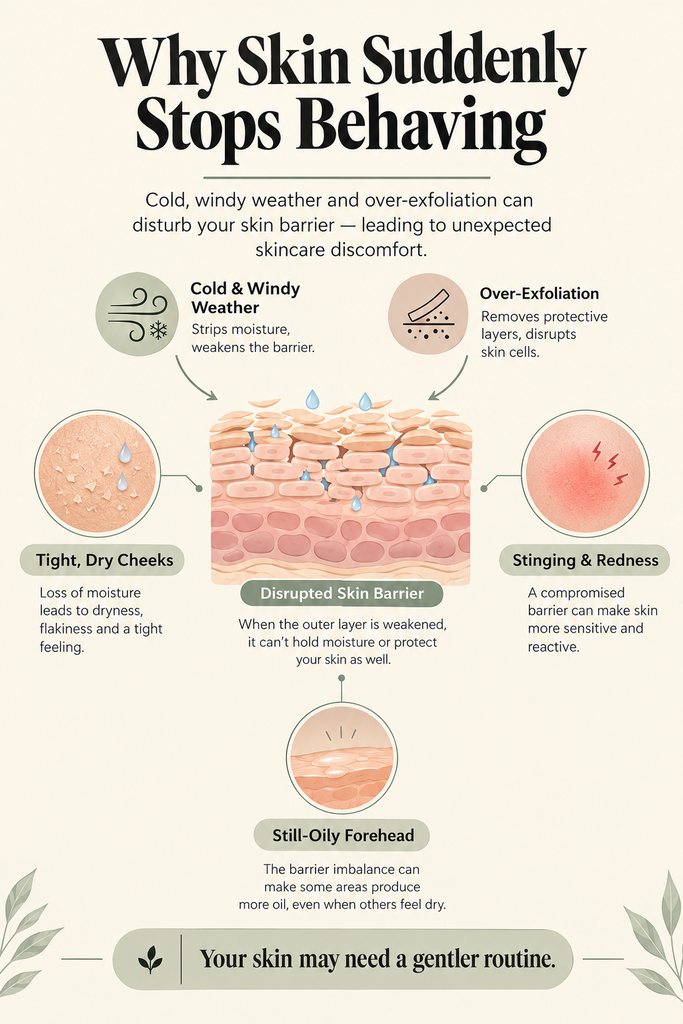
Imagine a person who has used the same face wash for years. After a week of cold, windy weather, plus a new exfoliating product, their face starts to sting when they apply moisturizer. Their cheeks feel tight and a little flaky, yet their forehead is still shiny.
Situations like this are common, and they often come down to one concept: the skin barrier. This article explains what it is, what can disturb it, how common skincare problems relate to it, and how to respond gently. It is educational and not a substitute for medical advice, and it does not recommend any products or brands.
What Is the Skin Barrier?
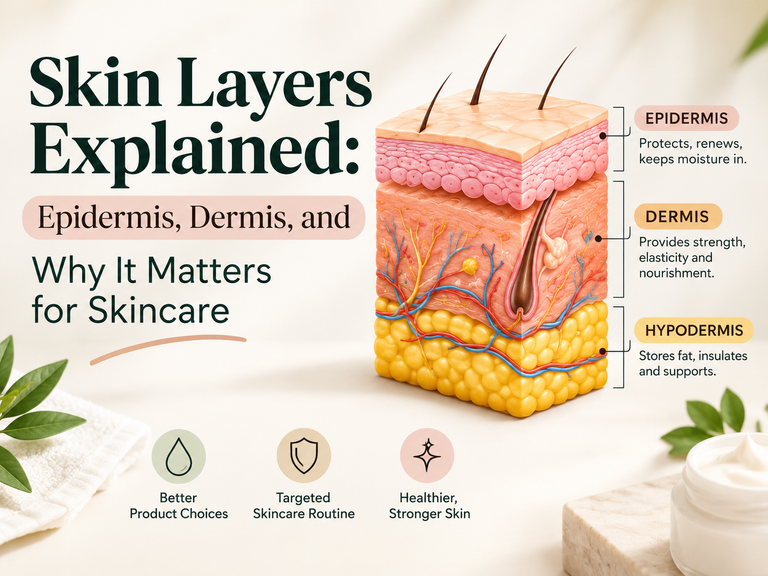
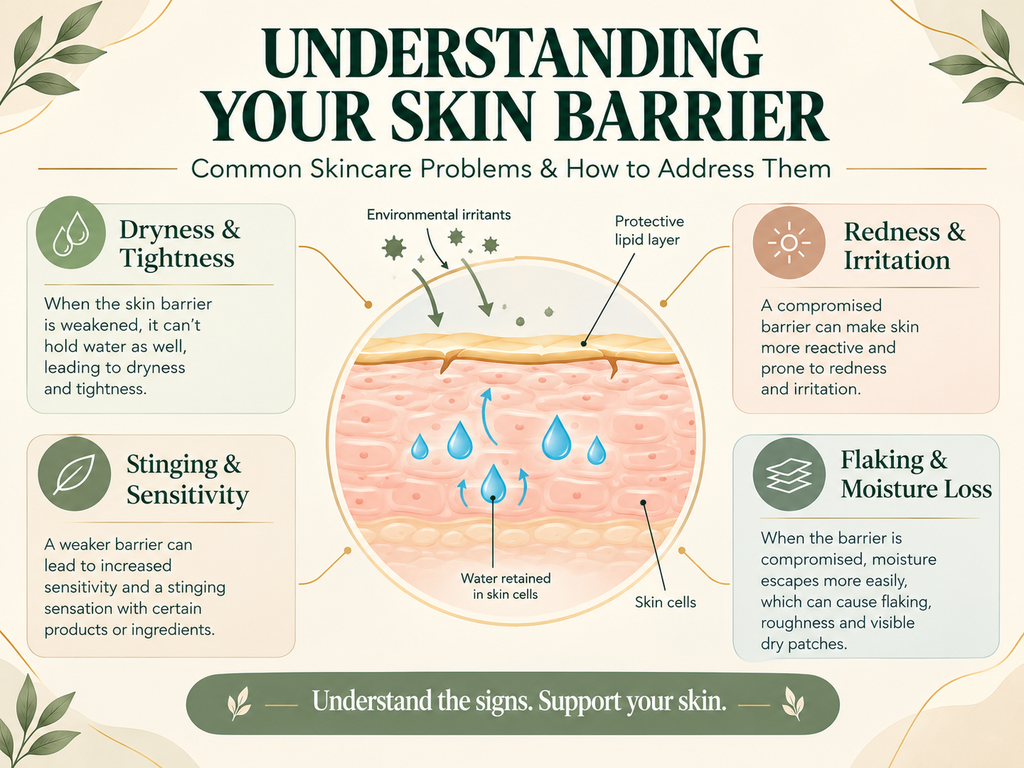
The skin barrier is mainly the stratum corneum, the outermost layer of the epidermis. Dermatology literature describes it as the layer that controls what passes in and out of the skin and helps keep the skin’s water content in balance (Rawlings, Harding and colleagues review this in the Journal of Clinical and Aesthetic Dermatology). A popular way to picture it is the “brick and mortar” model. The “bricks” are flattened skin cells, and the “mortar” is a mixture of fats (lipids) between them. Reviews describe this lipid matrix as essential for maintaining barrier function and limiting water loss through the skin.
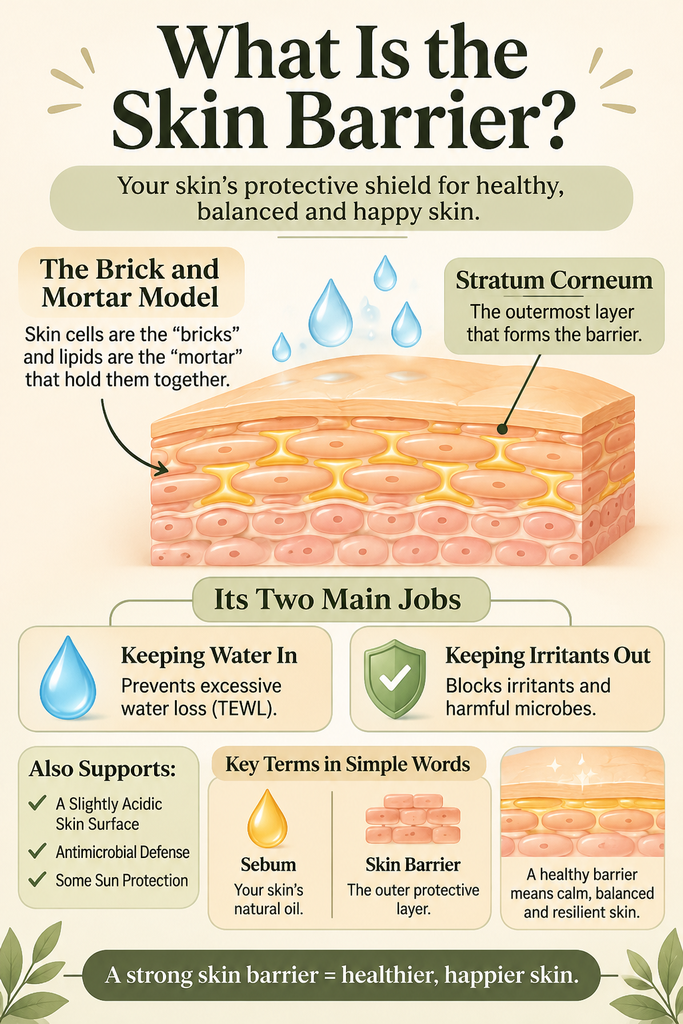
The barrier has two main jobs:
- Keeping water in. Water that evaporates through the skin is called transepidermal water loss (TEWL). A healthy barrier keeps it in check.
- Keeping irritants out. The barrier also helps limit what enters the skin, including some irritants and microbes.
It also does other work, such as supporting a slightly acidic skin surface and helping protect against sunlight (a review describes antimicrobial and photoprotective roles alongside the water barrier).
Two terms explained
- Sebum is the skin’s natural oil. It contributes to the fats on the skin surface, but it is only one of several sources of barrier lipids.
- The skin barrier is the outer protective layer described above.
Skin Type vs. Barrier Condition: Not the Same Thing
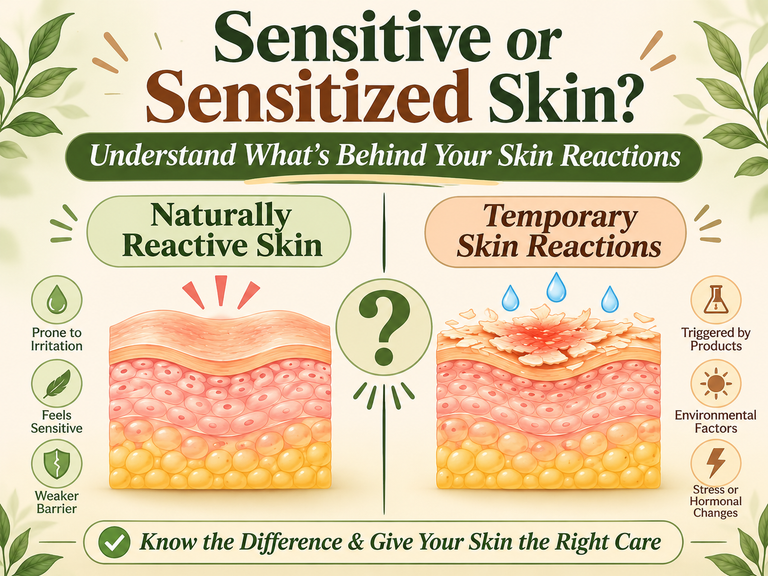
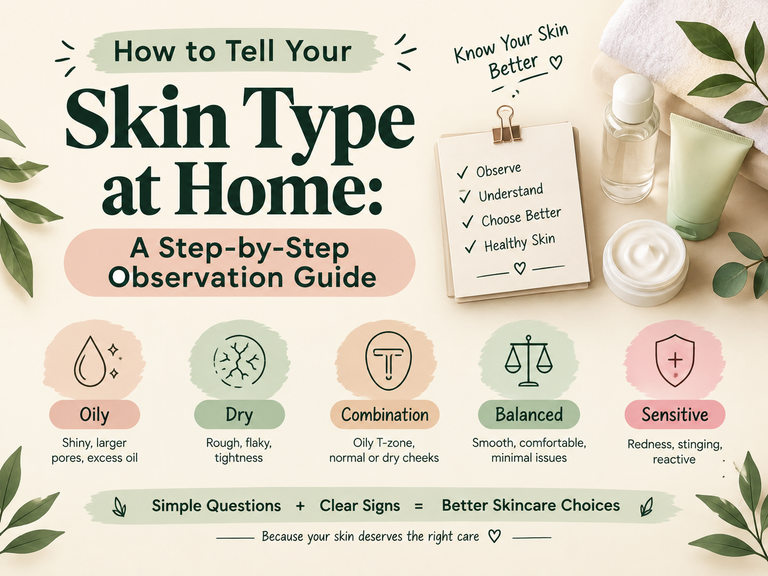
“Oily,” “dry,” and “combination” describe general patterns of oil production. The barrier is a separate matter. Someone with oily skin can have a stressed barrier, and someone with dry skin can have a well-functioning one. “Sensitive” or “reactive” describes how skin responds to things, and it can overlap with any type.
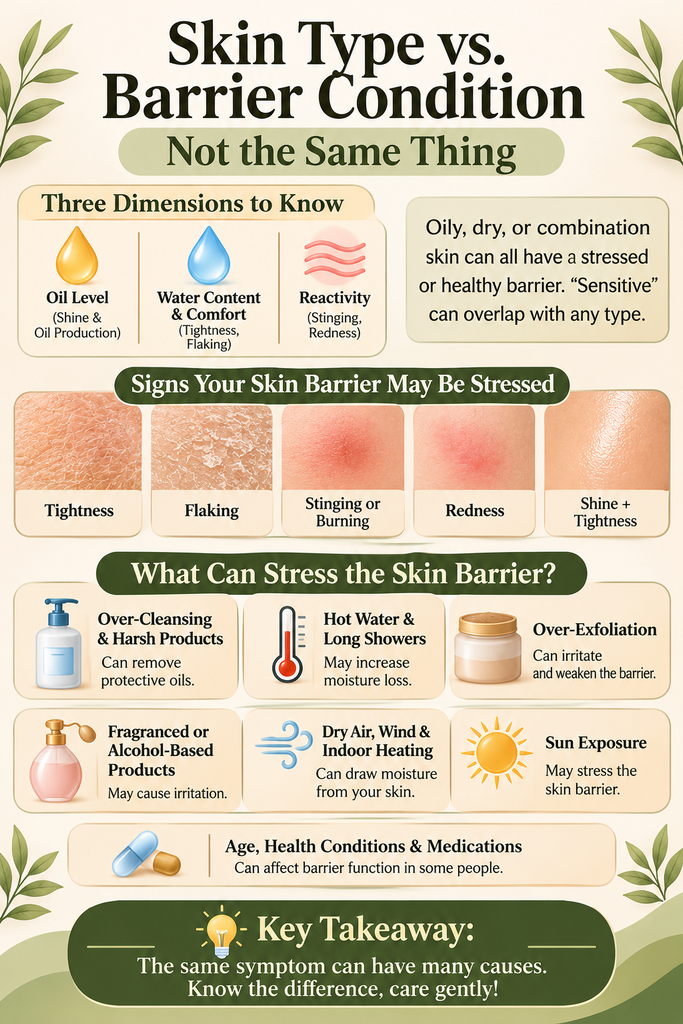
A useful habit is to think in three separate dimensions:
- Oil level (shine and oil production)
- Water content and comfort (tightness, roughness, flaking)
- Reactivity (stinging, burning, redness, itching)
One label cannot describe all three. We return to this idea later.
Signs Your Skin Barrier May Be Stressed
No single home test indicates barrier health. Clinics can measure TEWL with specialist instruments, but you can’t judge it in a mirror. What you can notice are patterns of discomfort. Possible signs include
- Tightness, especially after cleansing
- Rough texture or fine flaking
- Stinging or burning when applying previously comfortable products
- Redness that seems new
- Increased dryness along with more visible shine, which can happen when skin is dehydrated but still produces oil
These signs are not diagnostic. They can also be caused by eczema, rosacea, allergic reactions, and other conditions, so they should not be treated as proof of a “damaged barrier.”
| Observation | Possible barrier-related explanation | Other possible explanations |
| Tightness after washing | The cleanser removed too much surface oil; the barrier was stressed. | Naturally dry skin; cold or dry air |
| Stinging with products | Barrier stress: irritating ingredient | Allergic reaction; rosacea; eczema |
| Flaking | Dehydration; over-exfoliation | Seborrheic dermatitis; psoriasis; dry-air exposure |
| Shine plus tightness | Oily but dehydrated skin | Heavy product layers; temporary weather effects |
| Persistent redness | Irritation | Rosacea; sunburn; allergy |
Key takeaway: The same symptom can have many causes. The table is a guide to possible explanations, not a diagnosis.
What Can Stress the Skin Barrier?
Research and dermatology guidance point to several common contributors. Individual responses vary.
Over-cleansing and harsh products. Solvents can dissolve the fats between skin cells (a review in Acta Dermatovenerologica notes this allows externally applied substances to penetrate more easily). Dermatologists generally advise gentle cleansing, using only as much cleanser as needed to remove dirt and oil, and avoiding thick lather (American Academy of Dermatology self-care advice).
Hot water and long showers. The AAD suggests keeping baths and showers to about five to ten minutes in warm water, and patting skin dry rather than rubbing.
Over-exfoliation. Scrubs, acids, and similar products can be useful for some people, but frequent use on irritated skin may add stress. Reduce or pause them if your skin is stinging.
Fragranced or alcohol-based products. Dermatologists note that deodorant soaps, alcohol-based toners, and fragranced products can irritate dry, sensitive skin.
Dry air, wind, and indoor heating or air conditioning. Low-humidity environments may increase water loss from the skin surface for some people. A humidifier at home is one option dermatologists mention (AAD dry-skin guidance). Note that humidity and temperature are different things. A room can be warm yet dry.
Sun exposure. The AAD recommends broad-spectrum, water-resistant sunscreen of SPF 30 or higher, shade, and protective clothing.
Age, health conditions, and medications. Aged skin tends to show reduced barrier function in some reviews, but not everyone is affected equally. Some medicines and medical conditions also affect skin dryness.
Common Skincare Problems and What May Be Going On
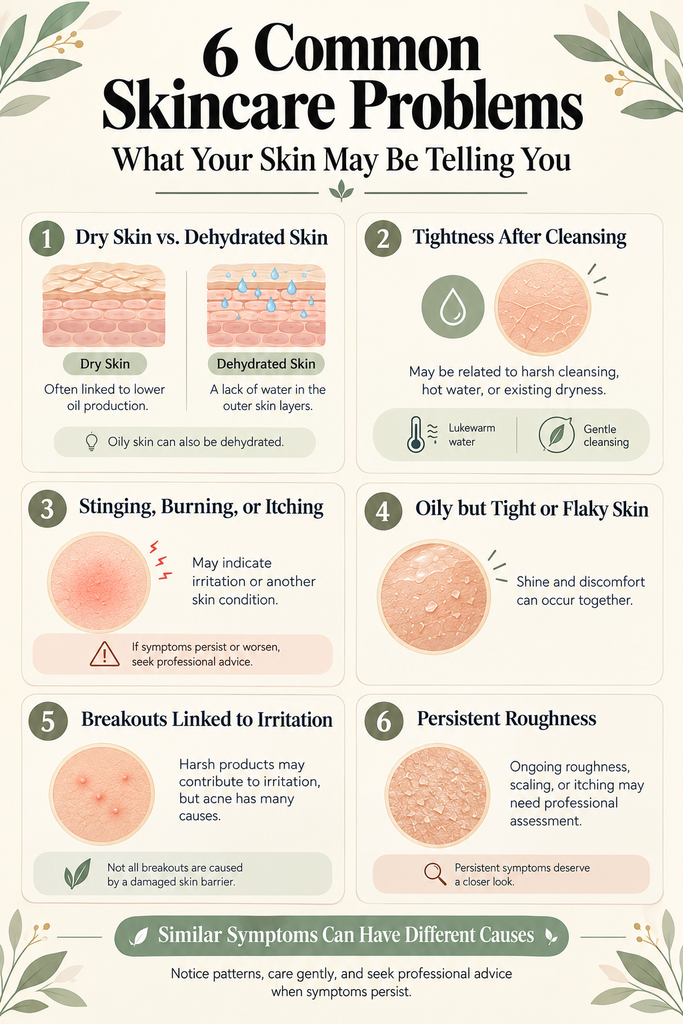
1. Dry Skin vs. Dehydrated Skin
These terms are often mixed up:
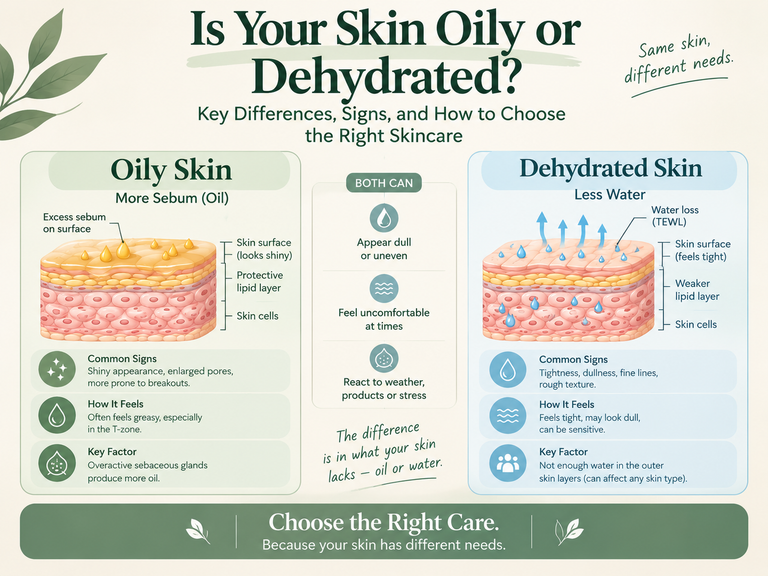
- Dry skin usually refers to a skin type characterized by lower oil production.
- Dehydrated skin refers to a temporary lack of water in the outer layers. It can happen to any skin type, including oily skin.
| Feature | Dry skin | Dehydrated skin |
| Main issue | Lower oil production | Insufficient water in the outer layers |
| Typically lasts | Long-term pattern | Often temporary and condition-related |
| Can occur with oily skin? | Not usually | Yes |
| Possible influences | Genetics, age, hormones | Dry air, harsh cleansing, sun, illness |
Key takeaway: Appearance alone cannot confirm which one you have. Many people experience a mix.
2. Tightness After Cleansing
Tightness after washing does not automatically mean you have dry skin. It may mean the cleanser was too strong or the water too hot, or that the skin was already stressed. A gentler cleanser, lukewarm water, and moisturizing afterwards often help.
3. Stinging, Burning, or Itching
This is the sign that most deserves attention. It may reflect barrier stress, but it can also signal an allergic reaction or a skin condition. Do not assume it is just “weather” or “your skin type”. Pausing the newest or most active product is a reasonable first step. If symptoms continue, see a professional.
4. Oily but Tight or Flaky Skin
Skin can look shiny and still feel uncomfortable. Some people respond to this by washing more, which can add stress. A gentle routine with a light moisturizer is a common dermatology-based approach, though needs vary.
5. Breakouts That Seem Linked to Irritation
Acne has many causes, including hormones and genetics. Irritation from harsh products can make skin uncomfortable, but this article cannot determine the cause of your breakouts. Persistent or painful acne should be assessed by a professional.
6. Roughness That Does Not Improve
Persistent rough, scaly, or very itchy skin may be linked to conditions such as eczema. The AAD notes that overly dry skin may be due to an underlying medical condition such as atopic dermatitis, psoriasis, or kidney disease.
How to Address Barrier Stress: Gentle Principles
This is general education, not a prescription. Individual tolerance differs.
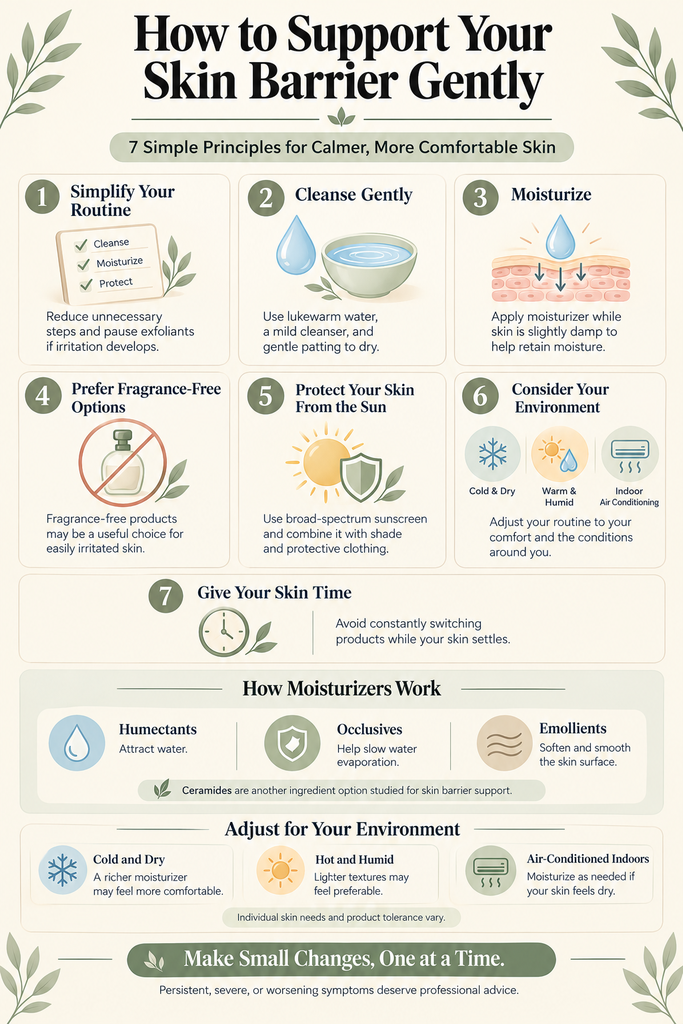
1. Simplify first. Reduce the number of products and pause exfoliants or strong actives if your skin is irritated.
2. Cleanse gently. Use lukewarm water, a mild cleanser, and avoid scrubbing. Pat dry.
3. Moisturize. The AAD advises applying moisturizer when skin is still damp after bathing, after washing hands, and when skin feels dry. It also notes that creams and ointments tend to be more effective than lotions.
Moisturizers combine different types of ingredients. A clinical review describes them as mixing humectants, occlusives, and emollients to improve hydration and reduce water loss (StatPearls review):
- Humectants (such as glycerin) attract water.
- Occlusives (such as petrolatum) form a seal to slow evaporation.
- Emollients soften and smooth the surface.
- Ceramides are skin-identical fats that researchers study for barrier support. Evidence varies by product, so treat them as one option, not a requirement.
4. Choose fragrance-free where possible. Dermatologists generally suggest this for dry, sensitive skin.
5. Protect from the sun. Daily broad-spectrum sunscreen is part of barrier care, since sun exposure can add stress.
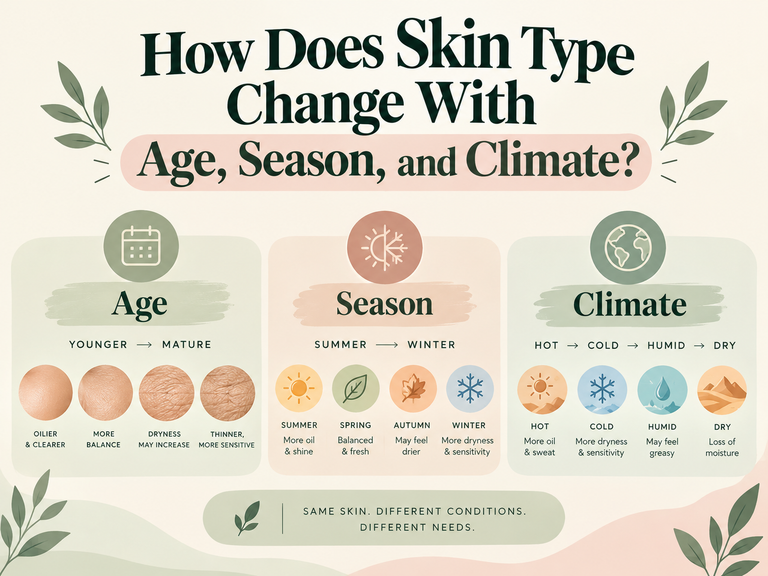
6. Manage your environment. In dry indoor air, a clean humidifier may help comfort. In air-conditioned spaces, watch for dryness and adjust your moisturizer if needed. In hot, humid climates, a lighter texture may feel more comfortable, but this is a preference rather than a rule.
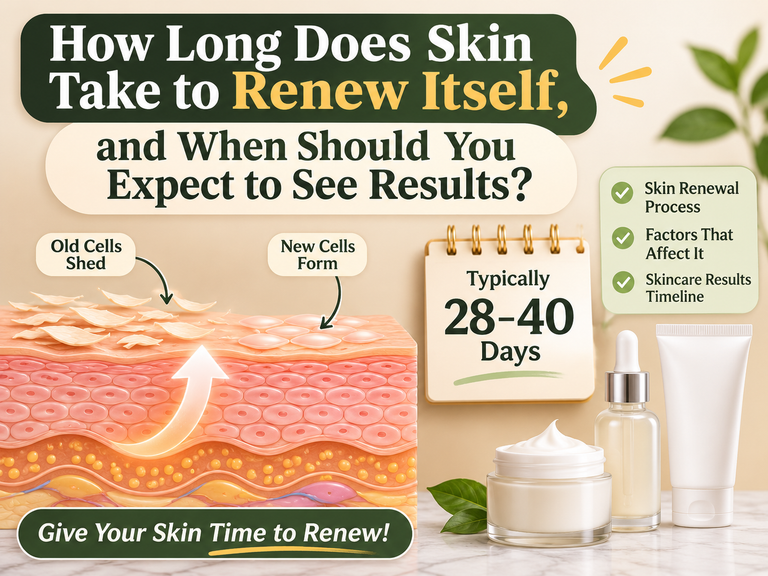
7. Be patient. Skin often needs days to weeks to settle after irritation. Constantly switching products can slow this down.
| Situation | Possible adjustment | Limitation |
| Cold, dry weather | Richer moisturizer; shorter, cooler showers | Not everyone needs a heavier cream |
| Hot, humid weather | Lighter textures; gentle cleansing | Humidity does not mean you are oily |
| Air-conditioned office | Moisturize as needed | Individual responses vary |
| After over-exfoliating | Pause exfoliants; keep routine minimal | Persistent symptoms need professional input |
Key takeaway: Adjust one thing at a time, in small steps.
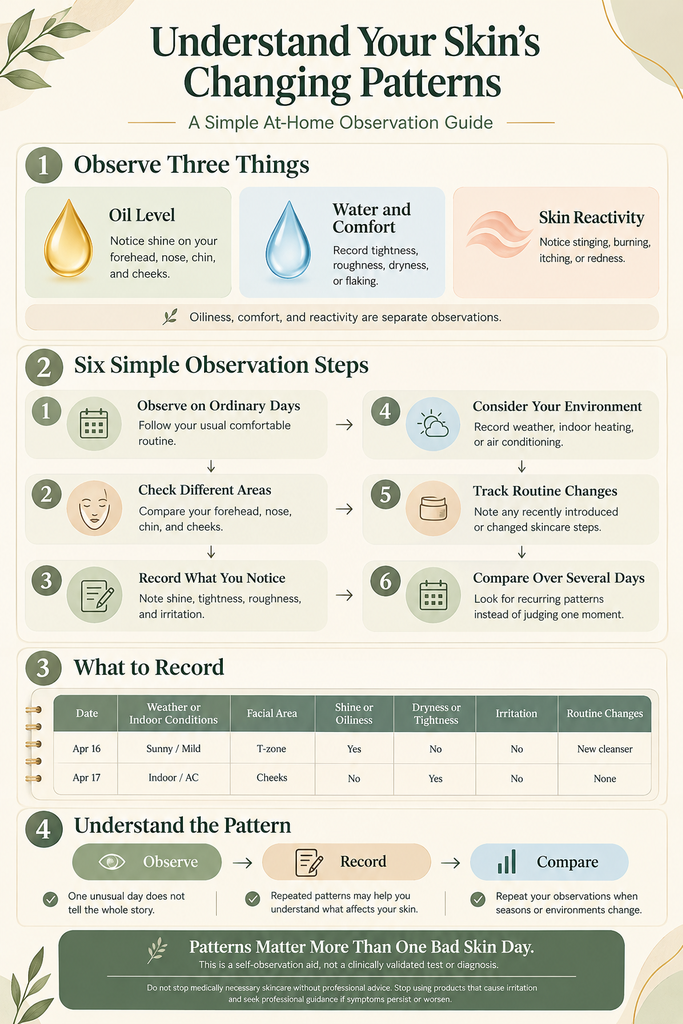
A Simple Way to Observe Your Skin at Home
You do not need special tools. This is a self-observation aid, not a clinically validated test.
- Observe your skin on ordinary days during a comfortable routine.
- Note differences between forehead, nose, chin, and cheeks.
- Record shine, tightness, roughness, flaking, stinging, or redness.
- Note conditions: weather, indoor heating or cooling, or any routine changes.
- Compare several days rather than judging one moment.
- Repeat when the season changes.
Sample observation log:
| Date | Weather or indoor conditions | Facial area | Shine or oiliness | Dryness or tightness | Irritation | Recent routine changes |
Key takeaway: Patterns over several days are more informative than a single bad skin day. Do not stop medically necessary skincare, and do not keep using anything that irritates.
Practical Insights Beyond the Basics
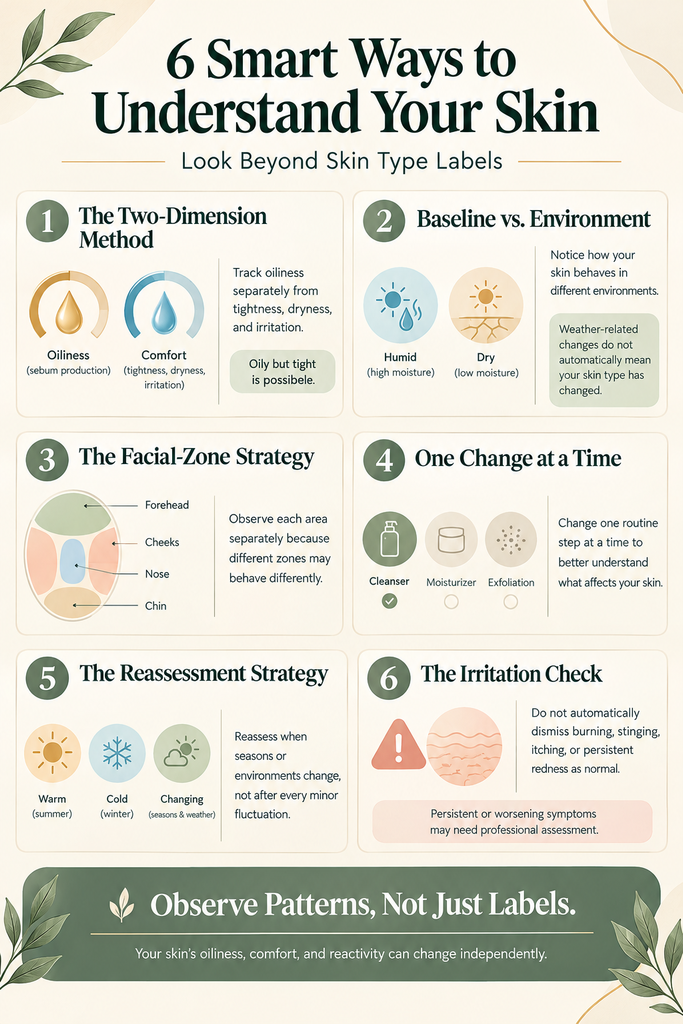
1. The Two-Dimension Method. Rate oiliness separately from comfort and reactivity. “Oily but tight” is a legitimate combination, and a single label hides it.
2. Baseline versus environment. Compare your skin’s usual behaviour to how it behaves in a specific condition. For example, the same person might notice more shine in humid weather and more tightness in dry weather. That variation can happen without a change in underlying skin type.
3. The Facial-Zone Strategy. The forehead, nose, chin, and cheeks may behave differently. Do not classify the whole face from one area.
4. One change at a time. If you change cleanser, moisturizer, and exfoliant together, you cannot tell which one helped or harmed.
5. The Reassessment Strategy. Reassess when seasons change, when you move to a different climate, or when a shift persists. Do not change your routine over every minor daily fluctuation.
6. The Irritation Check. Burning, stinging, itching, or persistent redness should not automatically be dismissed as “normal winter skin” or “my skin type”.
Common Mistakes to Avoid
- Washing more because skin feels oily. This may strip more oil and worsen discomfort. Keep cleansing gentle.
- Over-exfoliating. More is not better. Pause if skin stings.
- Skipping moisturizer on oily skin. Oily skin can still lack water.
- Confusing dehydrated skin. The two may need different approaches.
- Confusing sweat with sebum. They are different substances.
- Changing many products at once. It prevents you from identifying the cause.
- Blaming everything on the weather. Persistent irritation needs attention.
- Ignoring indoor conditions. Heating and air conditioning can matter as much as outdoor weather.
- Using many products on dry skin. A simple routine is often enough.
- Treating home observation as diagnosis. It cannot identify skin disease.
When to Seek Professional Advice
Consider seeing a qualified healthcare professional or dermatologist if you have persistent redness, burning, itching, painful inflammation, significant peeling, or a sudden unexplained change that does not improve with gentle care. The AAD advises seeing a board-certified dermatologist if dry skin continues after trying recommended home tips. Home observation cannot diagnose eczema, rosacea, allergic contact dermatitis, or other conditions. Getting assessed is simply a sensible step, not a cause for alarm.
Frequently Asked Questions
1. What is the skin barrier in simple terms?
It is the outer protective layer of the skin that helps hold in water and keep out irritants.
2. Can I tell if my skin barrier is damaged just by looking?
Not reliably. Tightness, stinging, and flaking may suggest stress, but they can have other causes.
3. How long does it take for the skin barrier to recover?
It varies with the cause and the person. Many people notice improvement over days to weeks with gentle care, but persistent symptoms need professional advice.
4. Can oily skin have a damaged barrier?
Yes. Oily skin can be dehydrated or irritated.
5. Do I need ceramides?
Not necessarily. Ceramides are one ingredient type studied for barrier support, and tolerance and benefit vary.
6. Should I stop exfoliating completely?
If your skin is stinging or irritated, pausing is reasonable. Reintroduce slowly if you wish.
7. Does a humidifier help?
It may improve comfort in dry indoor air for some people. Clean it regularly.
8. Why does my skin sting when I apply moisturizer?
Possible reasons include barrier stress, an irritating ingredient, or an allergy. Pause new products, and see a professional if it continues.
9. Is tightness after cleansing normal?
It is common, but it can mean the cleanser or water is too harsh for your skin.
10. When should I see a dermatologist?
If you have persistent or worsening redness, burning, itching, peeling, or pain, or if gentle care does not help.
Conclusion
The skin barrier works most of the time quietly. When it is stressed, the results can show up as tightness, flaking, stinging, or shine that does not match how the skin feels. The key lessons are to separate oiliness from water-related discomfort and reactivity, consider your environment, change one thing at a time, and observe patterns instead of reacting to one day. A temporary change in how your skin feels does not necessarily mean something is permanently wrong. When symptoms persist or worsen, professional advice is the best next step.