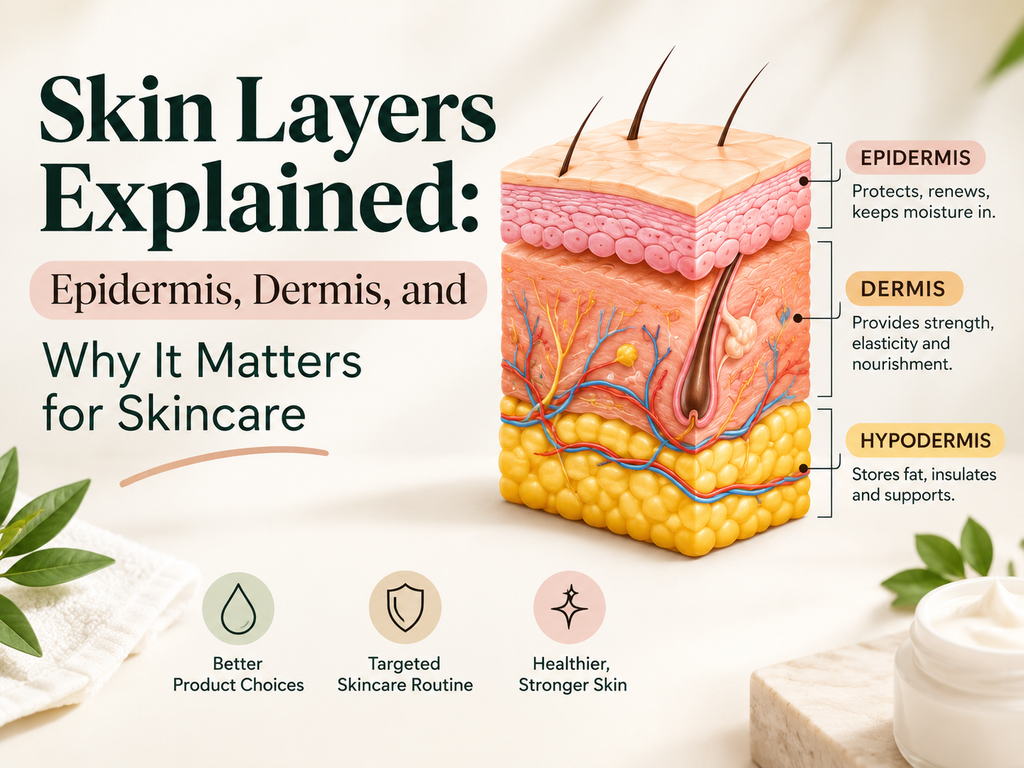
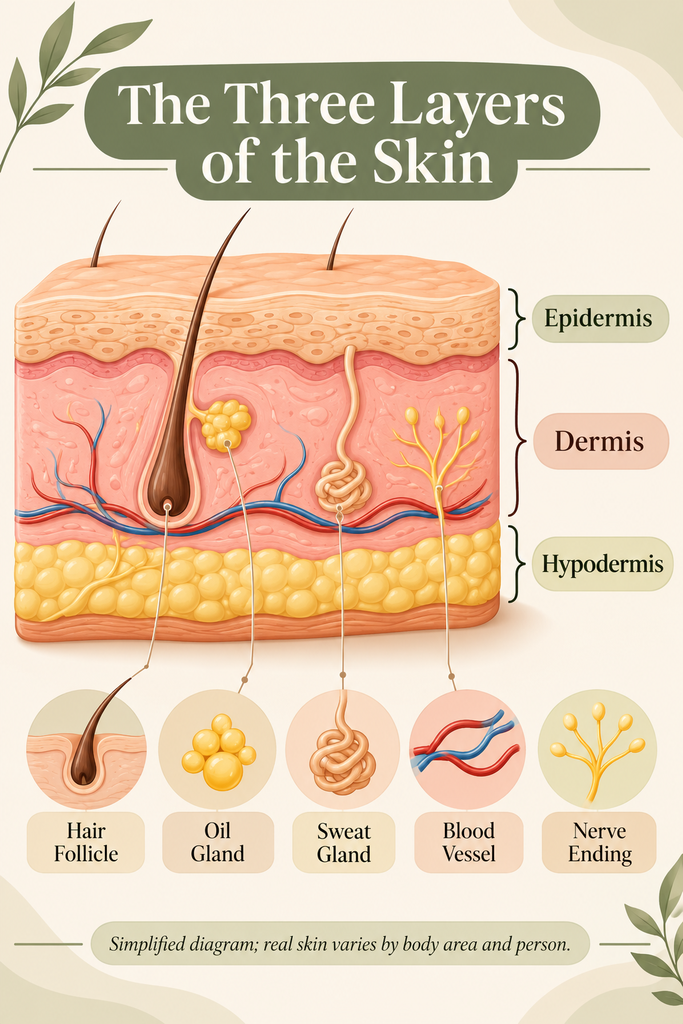
Short answer: Skin has three main layers: the epidermis (outermost), the dermis (middle), and the hypodermis (deepest, mostly fat). The epidermis acts as the protective barrier. The dermis provides strength, blood supply, and nerves. The hypodermis cushions and insulates. Most skincare products act on the surface and the outer epidermis, so knowing the layers helps you set realistic expectations.
Introduction: Why Skin Structure Matters
You may have seen claims that a cream “penetrates deep into the dermis” or “repairs the skin barrier.” These sound convincing, but they only make sense if you know what the dermis and the barrier are.
Skin is not one flat sheet. It is a layered organ, and each layer has its own job. This article explains those layers in plain English and shows how this knowledge helps you read skincare claims more critically. It is educational only and is not medical advice.
The Three Layers at a Glance
Anatomy textbooks do not all count the layers the same way. Some describe skin as two layers, the epidermis and dermis, with the hypodermis underneath. One StatPearls entry describes skin as the epidermis and dermis, with the hypodermis lying between the dermis and the organs below. Other sources list all three as “skin layers.” Both are common so you may see either version.
| Layer | Position | Main role | Key features |
| Epidermis | Outermos | Protection, water-loss control | Constantly renewing, no blood vessels |
| Dermis | Middle | Strength, nourishment, sensation | Collagen, elastin, nerves, glands, follicles |
| Hypodermic | Deepest | Cushioning, insulation, energy storage | Fat and loose connective tissue |
Key takeaway: The layers work together. The epidermis shields you, the dermis supports and feeds the epidermis, and the hypodermis cushions everything.
The Epidermis: Your Outer Protective Layer
The epidermis is the layer you can see and touch. Its main job is to be a barrier between your body and the outside world.
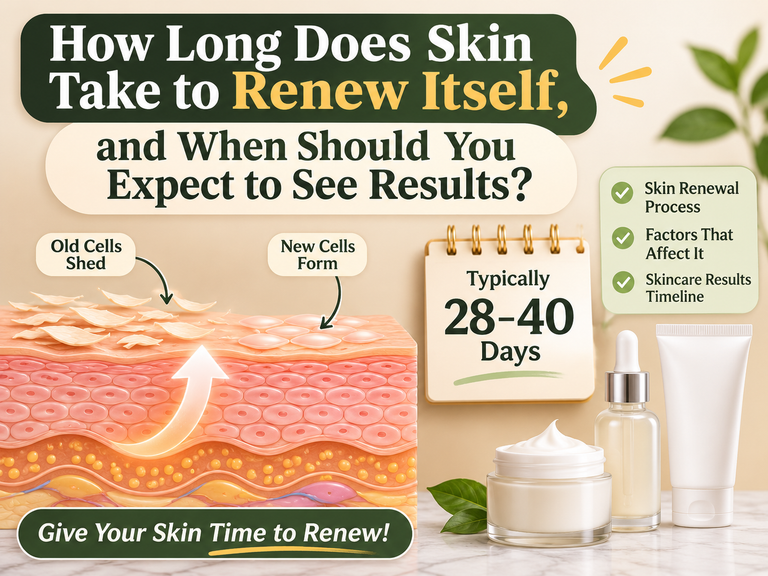
It renews itself. The epidermis regenerates from stem cells in its deepest (basal) layer, which push new cells upward toward the surface. As cells travel up, they flatten and fill with a tough protein called keratin. This process is why the surface of your skin is made of cells that are no longer alive.
It has no blood supply of its own. It gets its nutrients from the dermis below.
It controls water loss. Because of keratinization and lipid (fat) content, the outer layer helps regulate water loss by preventing internal fluid from evaporating.
It contains pigment cells. Melanocytes produce melanin, which contributes to skin color.
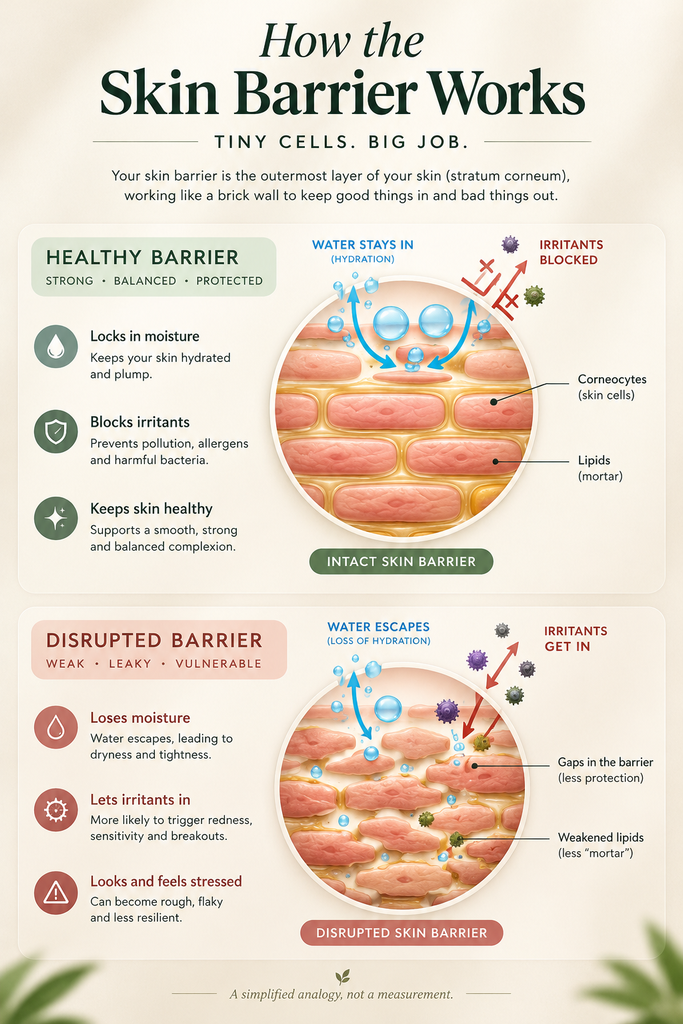
The Stratum Corneum: What People Mean by “Skin Barrier”
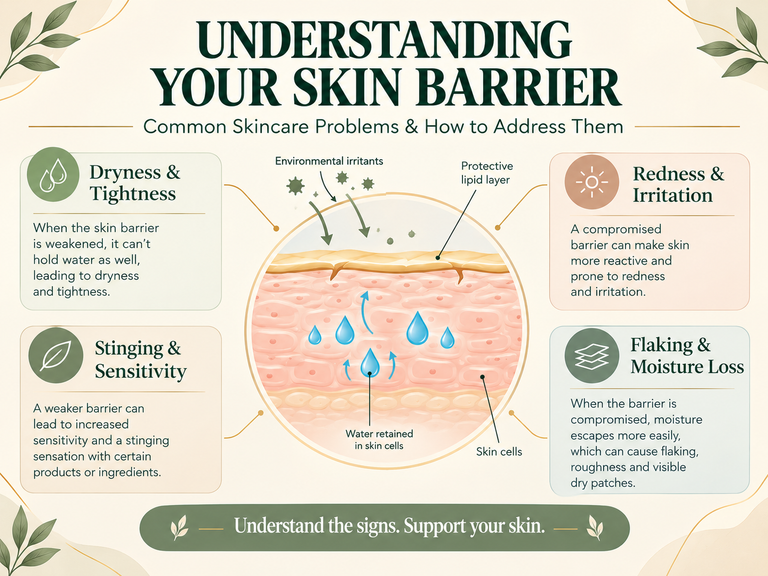
The outermost part of the epidermis is the stratum corneum. A common analogy is a brick wall: flattened cells are the “bricks” and natural lipids are the “mortar.” This analogy simplifies things, but it explains why the barrier keeps water in and many irritants out.
When people say the skin barrier is “damaged,” they usually mean this outer layer is not holding water or blocking irritants as well as usual. Harsh cleansing, over-exfoliation, very dry air, and some skin conditions can all play a role. You cannot diagnose the cause from the surface alone.
The Dermis: The Support and Supply Layer
Beneath the epidermis, the two layers connect through a thin boundary called the basement membrane. The dermis has two connective tissue layers, the papillary (upper) and reticular (lower), which blend without a sharp line between them.
What the dermis contains:
- Collagen and elastin: protein fibres that give skin strength and flexibility. The dermis is made of dense connective tissue with collagen fibre bundles.
- Blood vessels: these nourish the epidermis and help regulate temperature.
- Nerve endings: these detect touch, pressure, pain, heat, and cold.
- Sweat glands, hair follicles, and oil (sebaceous) glands: the dermis houses sweat glands, hair follicles, muscles, sensory neurons, and blood vessels. Oil glands attach to hair follicles and release sebum, the skin’s natural oil, onto the surface.
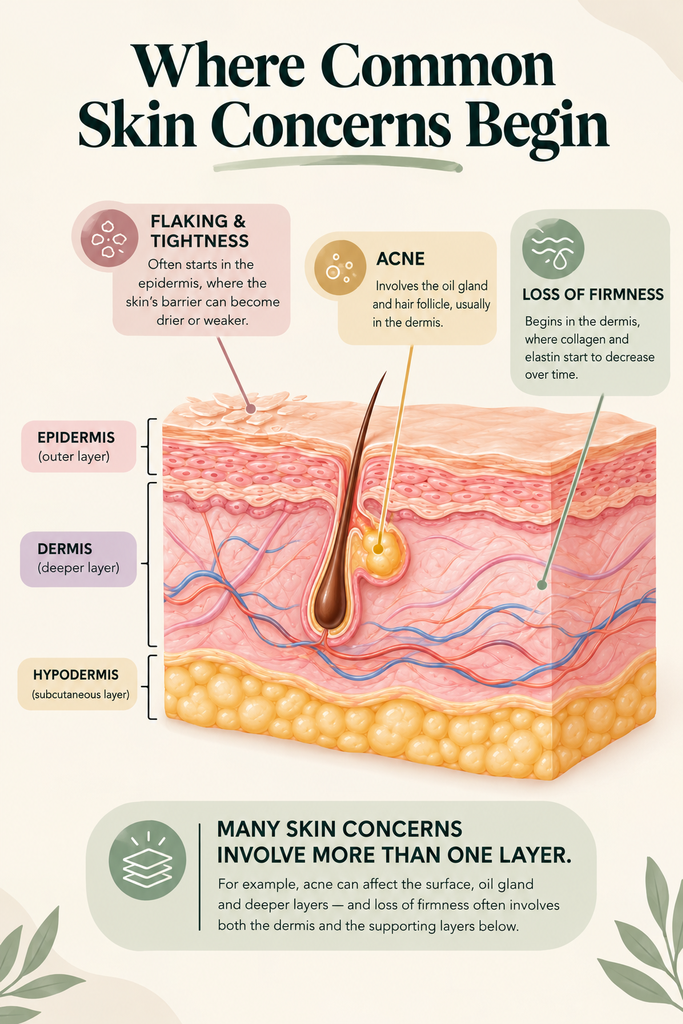
Many skin concerns involve the dermis, including acne (which starts in the oil gland and follicle) and the loss of firmness with age. But many of the changes you can see, such as flaking, tightness, or rough texture, are mostly epidermal.
The Hypodermis: Cushion and Insulation
The hypodermis, also called subcutaneous tissue, sits below the dermis. It is made of loose connective tissue and fat that cushions and insulates the body and connects the skin to muscle and other deeper structures. Its thickness varies by body area and from person to person.
It is rarely the focus of skincare, but it affects how skin sits and moves over the body and helps with temperature control.
Skin Layers by Body Area and Age
Skin is not identical everywhere. Thickness varies with body location, age, sex, medications, and overall health because of differences in the dermis and epidermis. Eyelid skin is thin, while palm and sole skin is thick. This is one reason a product tolerated on your arm may sting on your face.
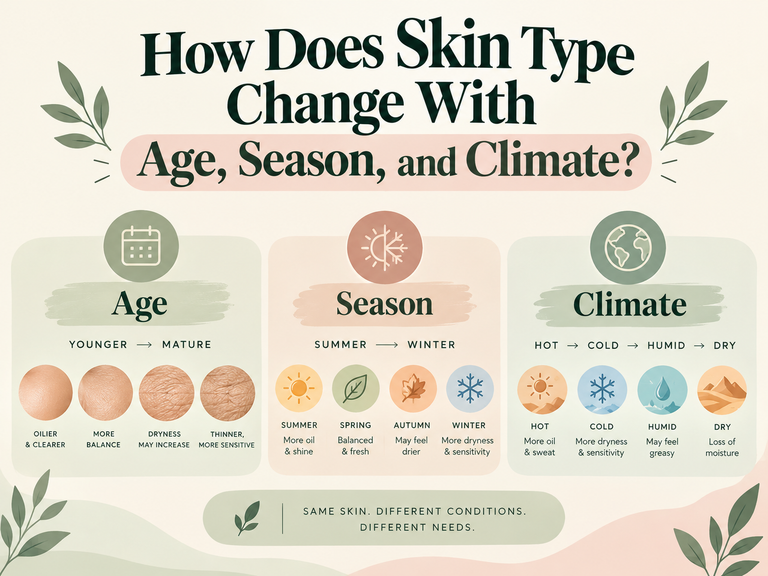
With age, many people notice changes such as slower renewal, less collagen, and a drier or thinner feel. These changes vary widely between individuals. Genetics, sun exposure, smoking, hormones, and health conditions all play a part, so age alone does not predict how someone’s skin will behave.
What This Means for Skincare
Most Skincare Works on the Surface and Outer Epidermis
Because the stratum corneum is designed to keep things out, products have a limited ability to reach the dermis. Whether and how much an ingredient penetrates depends on its molecular size, its formulation, and the condition of your skin. So the phrase “reaches the dermis” in marketing deserves a critical look.
Practical takeaway: A moisturizer’s main job is to support hydration in the outer epidermis. It is not to change the dermis. Claims about rebuilding collagen with a surface product should be read cautiously, and any ingredient that genuinely acts deeper is usually discussed in a medical context.
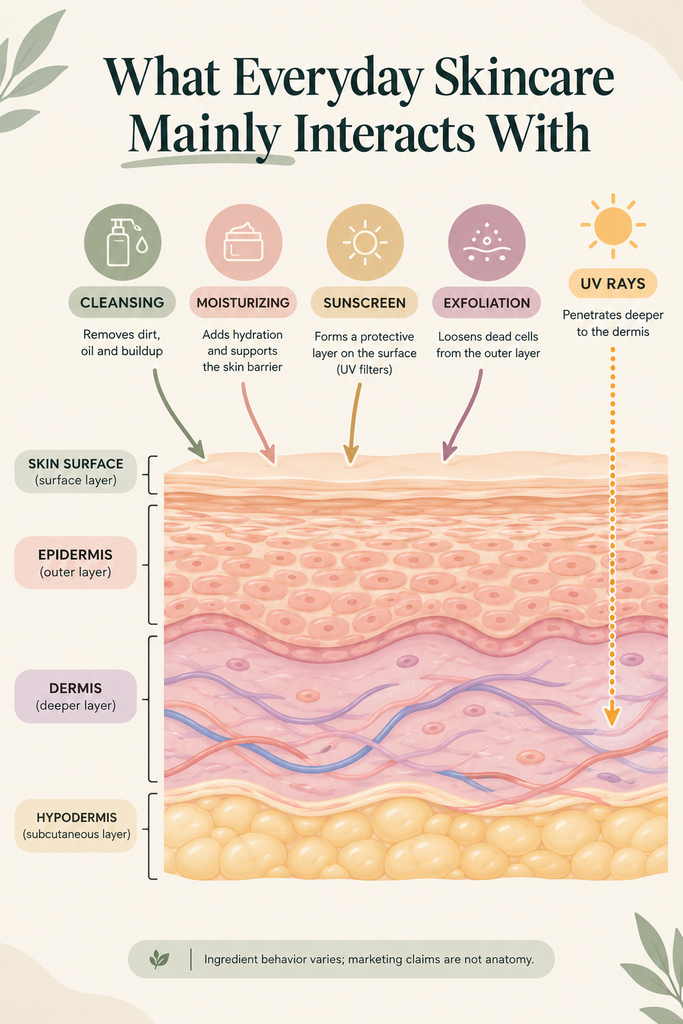
Table: What Different Skincare Habits Mainly Interact With
| Habit | Layer it mainly interacts with | Realistic expectation |
| Gentle cleansing | Skin surface and outer epidermis | Removes dirt and excess oil without stripping |
| Moisturizing | Stratum corneum | Helps reduce water loss and improves comfort |
| Sunscreen | Surface protection of epidermis and dermis | Reduces UV exposure that contributes to premature ageing |
| Exfoliation | Outer epidermis | Removes surface cells; overuse can irritate the barrier |
| Healthy sleep, nutrition, and not smoking | Whole skin, including dermis | Supports overall skin health over time |
Key takeaway: Good skincare is mostly about protecting and supporting the outer layer and avoiding damage to the dermis, such as from UV exposure.
Why Sunscreen Matters for Deeper Layers
UV radiation reaches the dermis, where it can contribute to the breakdown of collagen and elastin over time. Sunscreen reduces how much UV reaches these structures. It is one of the few everyday habits that protects the dermis.
Why Over-Exfoliating Backfires
Exfoliating removes surface cells. A little may help with rough texture, but too much can thin the protective layer, leading to stinging, redness, and tightness. If your skin feels irritated, giving the barrier time to recover is often more useful than adding another active product.
Common Skin Concerns and Where They Originate
| Concern | Layer mainly involved | Note |
| Flaking, rough texture | Epidermis (outer) | Often linked to dryness or barrier disruption |
| Tightness after washing | Epidermis (barrier) | May reflect water loss, not proof of a skin type. |
| Acne | Dermis (oil gland and follicle) | Influenced by hormones, genetics, and other factors |
| Fine lines and loss of firmness | Both layers, especially the dermis | Linked to ageing, UV exposure, and genetics |
| Redness or stinging | Epidermis, with possible dermal involvement | Persistent symptoms need professional assessment. |
This table is a simplified learning aid. Many concerns involve more than one layer.
Less Obvious Insights
- “Deeper” is not automatically “better.” A product that stays in the outer epidermis can still be useful. Moisturizers, for example, are designed to work there.
- Surface symptoms do not tell you which layer is involved. Dryness and irritation can look similar yet have different causes.
- The barrier is a process, not a fixed shield. It is constantly renewing, so gentle habits can allow it to recover.
- Thickness differs across the face. Cheeks, eyelids, and the nose behave differently, so one area’s reaction does not predict another’s.
- Layers depend on each other. The dermis supplies blood and nutrients to the epidermis, so overall health, circulation, and sun protection affect the surface too.
- Marketing language is not anatomy. “Deep hydration” and “repairs from within” are not precise anatomical terms.
Common Mistakes to Avoid
- Believing products must reach the dermis to work. Many useful products act on the outer epidermis.
- Treating tightness as proof of dry skin. It may reflect a temporarily stressed barrier.
- Over-washing or over-exfoliating. This can disrupt the barrier you are trying to protect.
- Ignoring sunscreen because the skin “looks fine.” UV damage accumulates in the dermis and is not always visible.
- Using the same approach on every body area. Skin thickness varies.
- Trying many new products at once. If irritation appears, you will not know the cause.
- Assuming surface symptoms reveal the deeper cause. Appearance alone cannot identify what is happening.
- Treating persistent irritation as normal. Burning, itching, or ongoing redness deserves proper assessment.
A Simple Way to Apply This Knowledge
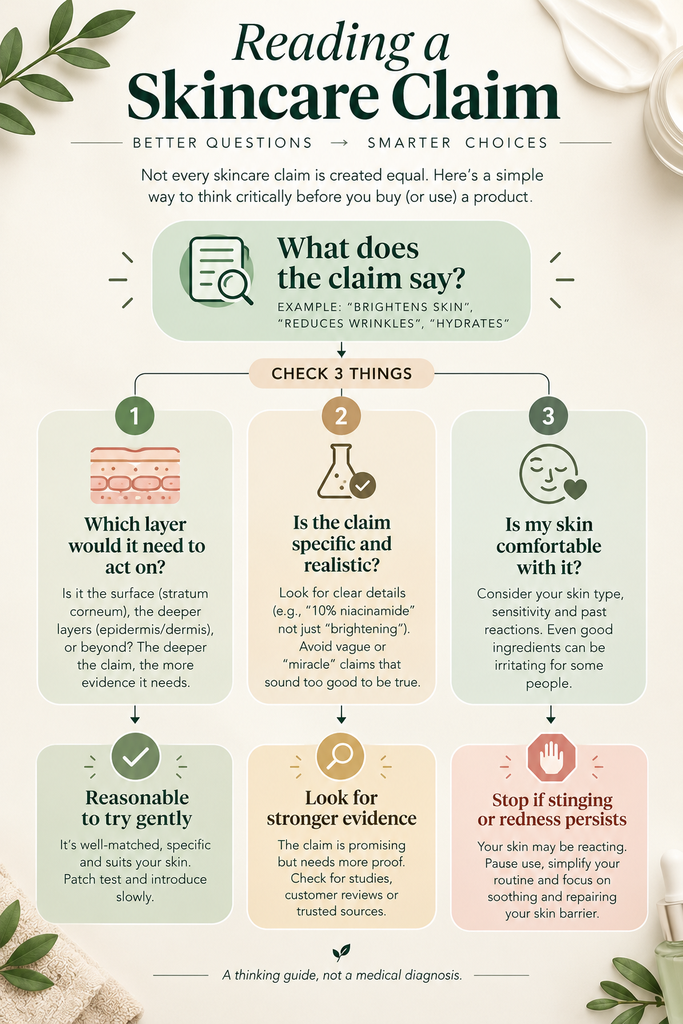
You do not need special tools. Ask three questions about any skincare claim:
- Which layer would this need to act on? Surface and outer epidermis claims are realistic. Claims about the dermis need stronger evidence.
- Is the claim specific? “Helps reduce water loss” is clearer than “regenerates from within.”
- Is my skin comfortable with it? Stinging or lasting redness is useful information.
When to Seek Professional Advice
Persistent redness, burning, itching, painful inflammation, significant peeling, or a sudden change that does not improve with gentle care deserves assessment by a qualified healthcare professional or dermatologist. Understanding skin layers cannot diagnose conditions such as eczema, rosacea, or allergic contact dermatitis.
Frequently Asked Questions
1. How many layers does skin have?
Most sources describe three layers: the epidermis, dermis, and hypodermis. Some textbooks count only the first two as “skin” and treat the hypodermis as the tissue beneath.
2. Which layer is the skin barrier?
Mainly the outermost part of the epidermis, the stratum corneum.
3. Do moisturizers reach the dermis?
Moisturizers are mainly designed to support hydration in the outer epidermis. They are not meant to act in the dermis.
4. Where is collagen found?
Mostly in the dermis, where it gives skin its strength.
5. Does the epidermis have blood vessels?
No. It receives nutrients from the dermis.
6. Is the hypodermis the same as body fat?
It is the fat-containing layer under the dermis, but “body fat” also exists elsewhere in the body.
7. Does skin thickness change with age?
It can. Thickness depends on factors including location, age, and overall health. The changes vary between people.
8. Where does acne start?
In the oil gland and hair follicle within the dermis, influenced by factors such as hormones and genetics.
9. Why does sunscreen matter if I don’t burn?
UV reaches the dermis and contributes to long-term changes even without visible burning.
10. When should I see a professional?
If symptoms such as burning, itching, or significant peeling persist or worsen.
Conclusion
Skin is a layered organ. The epidermis protects and controls water loss, the dermis supports and nourishes, and the hypodermis cushions and insulates. Most everyday skincare works on the surface and outer epidermis, while habits like sun protection help protect the dermis. When you read a skincare claim, ask which layer it would need to act on and whether that is realistic. Understanding this structure will not diagnose a skin problem, but it will make you a more confident reader of skincare information.