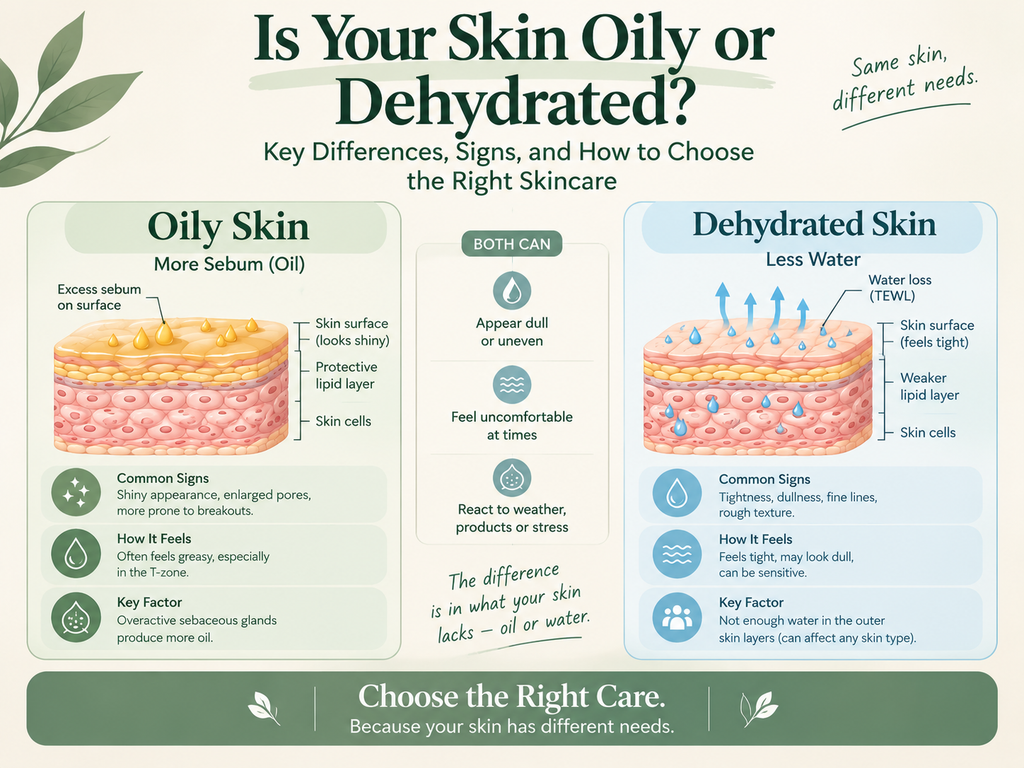
Short answer: Oily skin describes how much natural oil (sebum) your skin tends to produce. Dehydrated skin describes how much water is in the outer skin layers right now. They are different things, so one person can have both at the same time. Shine does not prove your skin has enough water, and tightness does not prove your skin is dry.
Introduction: Why Shiny Skin Can Still Feel Tight
Imagine someone whose forehead is shiny by noon. After washing, their cheeks feel tight. In winter, the shine fades, but the tightness gets worse, and in humid summer the shine returns. They wonder whether their skin type keeps changing.
Often it has not. They may be mixing up two separate things: how oily the skin is and how well the skin holds water. This article explains the difference, why they overlap, and how to observe your skin without special tools. It is general education, not medical advice.
What Is Oily Skin?
Sebum is the skin’s natural oil. It is made by sebaceous (oil) glands, which are found throughout the skin, with many on the face. Skin that tends to make more sebum is usually described as oily. It often looks shiny, especially on the forehead, nose, and chin.
Dermatology guidance treats oily skin as having both drawbacks and benefits. The American Academy of Dermatology (AAD) notes that oily skin can clog pores and lead to more breakouts, but it also has benefits. It also advises that people with oily skin should still moisturize.
Oil production varies with genetics, hormones, stress, and conditions such as humidity. Not everyone follows the same pattern.
What Is Dehydrated Skin?
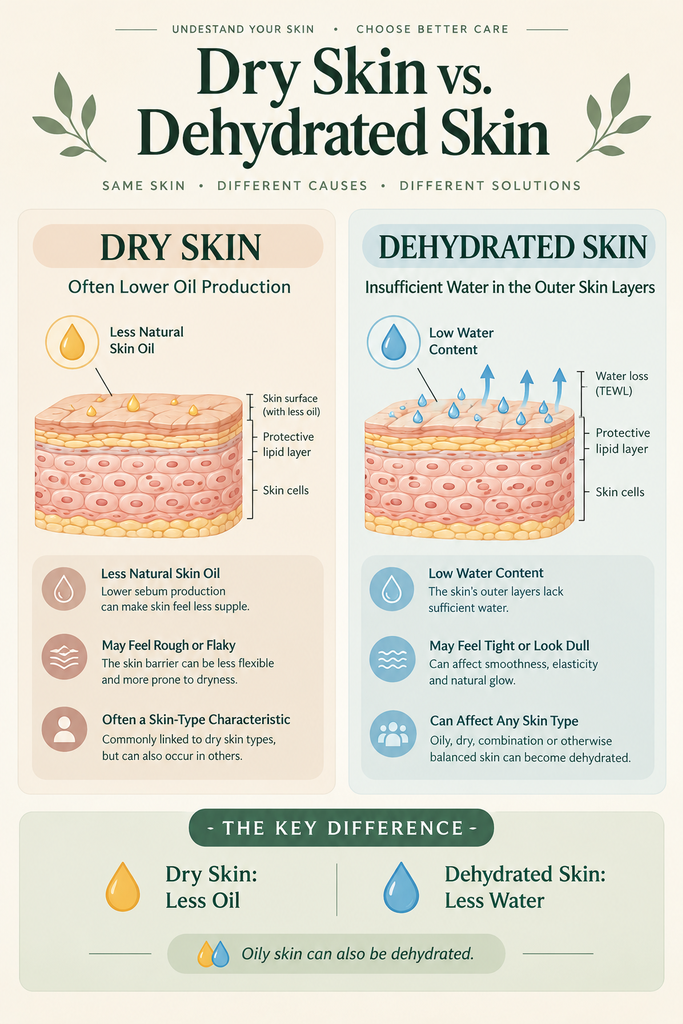
Dehydrated skin is skin with less water than it needs in its outer layers. Dermatologists quoted in health media describe it as a state or condition, not a skin type, and note that any skin type, including oily, can be dehydrated and that it is unrelated to oil levels.
Common signs include:
- A tight feeling, especially after cleansing
- A dull look
- Fine lines that seem more visible for a short time
- Skin that feels uncomfortable even though it still looks shiny
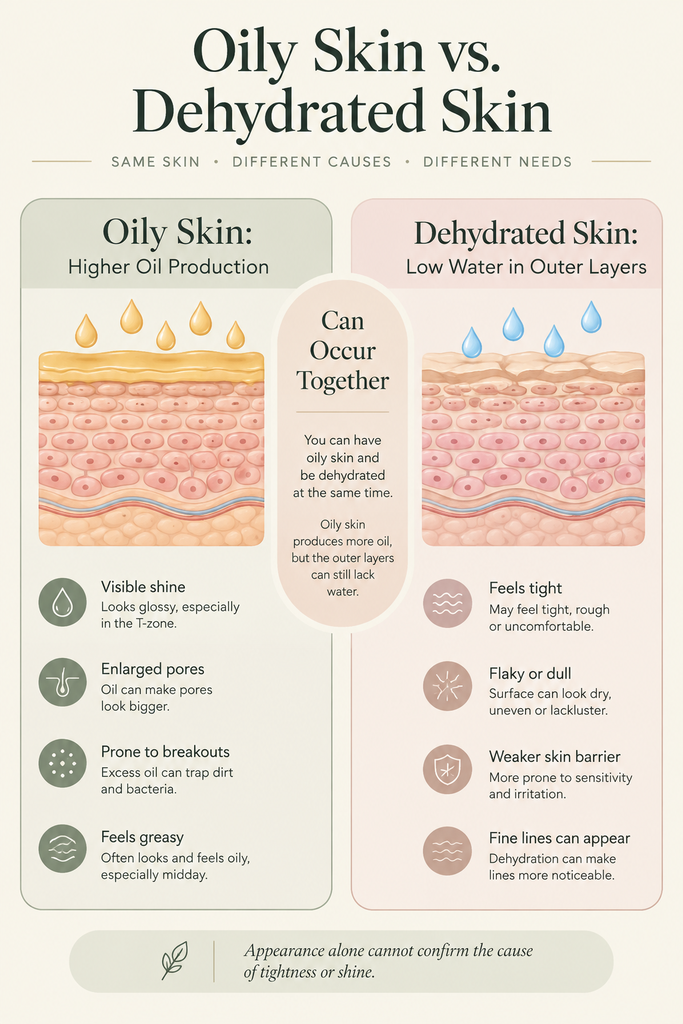
One dermatologist explains why oily skin can feel tight: oil helps prevent more water loss, but it does not add hydration.
Oily vs Dry vs Dehydrated: Three Different Ideas
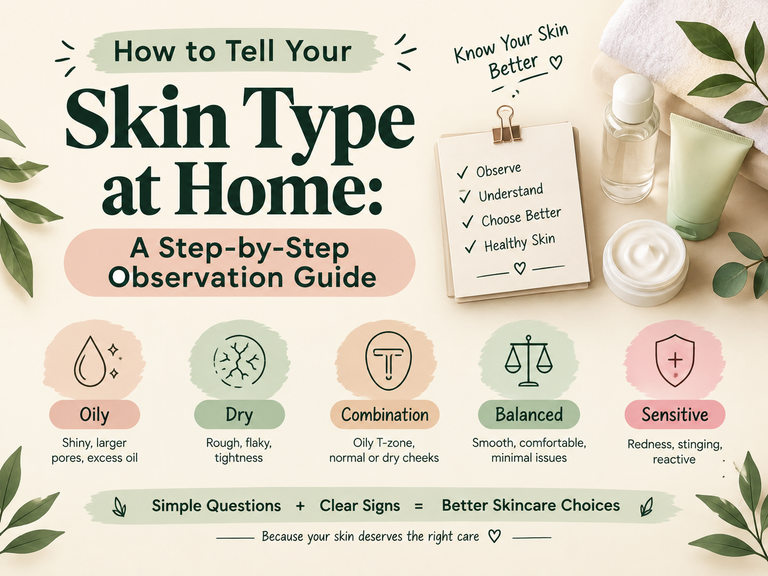
Skin is commonly grouped as oily, dry, combination, or balanced (normal). Sensitive or reactive skin overlaps with these groups rather than being a separate oil category.
- Oily/dry describes oil (lipids). Dry skin has lower oil production. Dermatologists describe dry skin as having fewer oil glands than normal skin.
- Dehydrated describes water.
- Sensitive/irritated describes reactivity.
These are three dimensions. A person can be oily and dehydrated, dry, or oily and irritated.
Some skin terms are used inconsistently across sources. For example, some sites treat dehydration as a skin type and others as a condition. In this article, I follow the common dermatology framing: oil level is a relatively stable tendency, while water content can change.
Comparison Table: Oily vs Dry vs Dehydrated Skin
| Feature | Oily skin | Dry skin | Dehydrated skin |
| What it relates to | Higher oil production | Lower oil production | Lower water content |
| Usually described as | A tendency/skin type | A tendency/skin type | A temporary state that can change |
| Typical look | Shine, especially in the T-zone | Rough, flaky, matte | Dull, tight, uneven |
| Typical feel | Greasy, or sometimes tight | Rough, may itch | Tight, uncomfortable |
| Can occur with oily skin? | Yes, by definition | Unlikely | Yes. |
| Main limitation | Shine alone does not show water level. | Flaking can have other causes. | Appearance alone cannot confirm the cause. |
Key takeaway: The three words describe different things. If you use one label for all your symptoms, you may misread what your skin needs.
Can Oily Skin Really Be Dehydrated?
Yes. Several dermatologists quoted in health media say oily skin can have plenty of sebum but low water content.
Common situations include:
- Washing more often, or with stronger cleansers, because skin feels oily
- Over-exfoliating
- Using harsh, drying products
- Spending time in air-conditioned or heated rooms
- Hot, dry, or windy weather
The AAD also cautions that overly harsh face wash can irritate skin and may increase oil production. This is one reason people can feel stuck in a cycle: shine, over-cleansing, tightness, then more shine.
Why Shine Can Be Misleading
Shine is surface oil. It tells you little about how much water is inside the outer layers. Think of a plate covered in oil: it looks glossy, but the oil does not tell you whether the food underneath is moist.
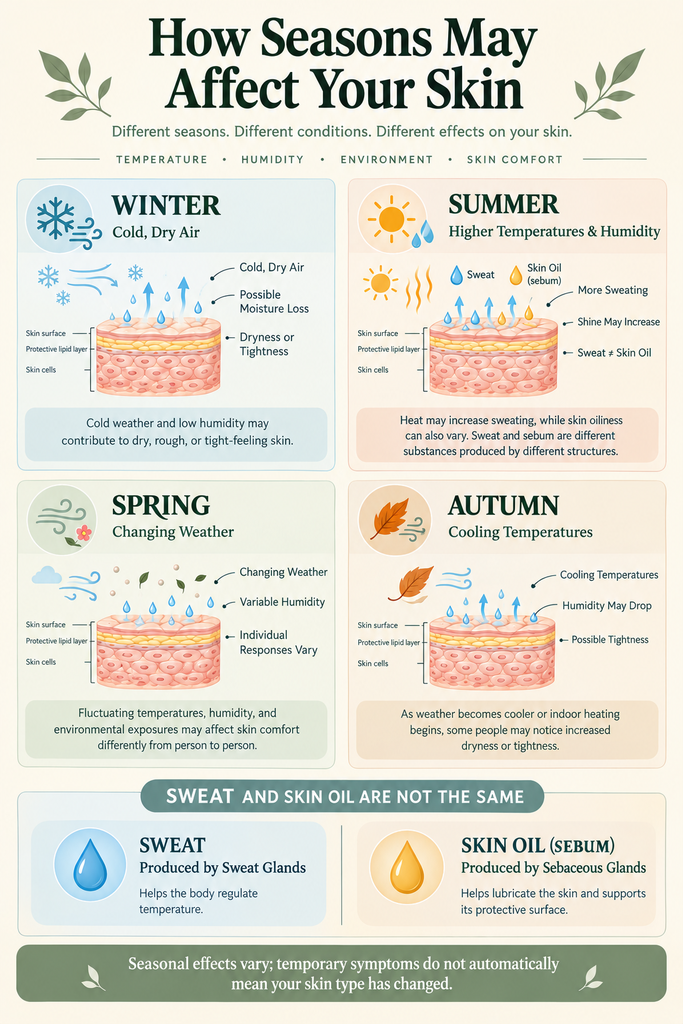
Temporary shine can also come from heat, sweat mixing with surface oil, hormonal changes, or a heavy product. Sweat and sebum are different substances: sweat is mostly water and salts from sweat glands, while sebum is oil from sebaceous glands.
Does the Skin Barrier Matter Here?
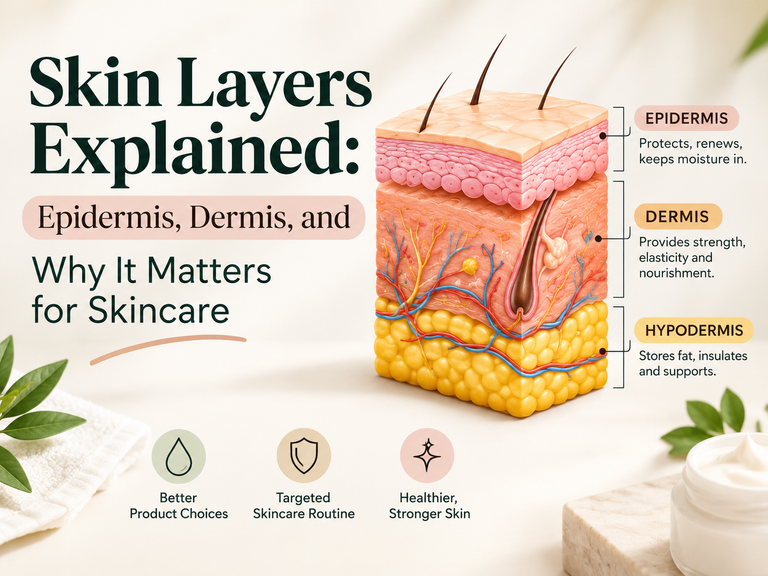
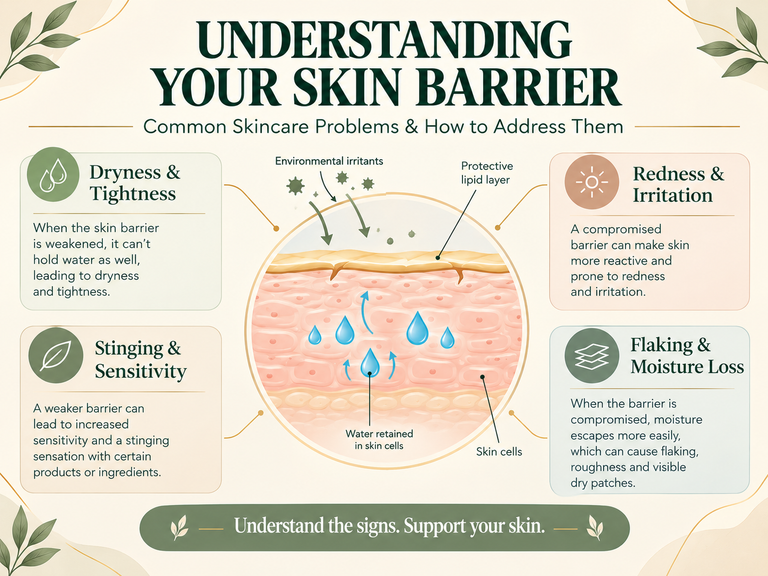
The skin barrier is the outer protective layer that reduces water loss and protects against irritants. Water naturally evaporates through the skin all the time. This is called transepidermal water loss (TEWL). When the barrier is disrupted, water loss may increase, and skin may feel tight or irritated.
Things that may stress the barrier include harsh cleansing, too much exfoliation, irritating products, very hot water, and extremes of weather. Barrier problems can happen in oily, dry, or combination skin.
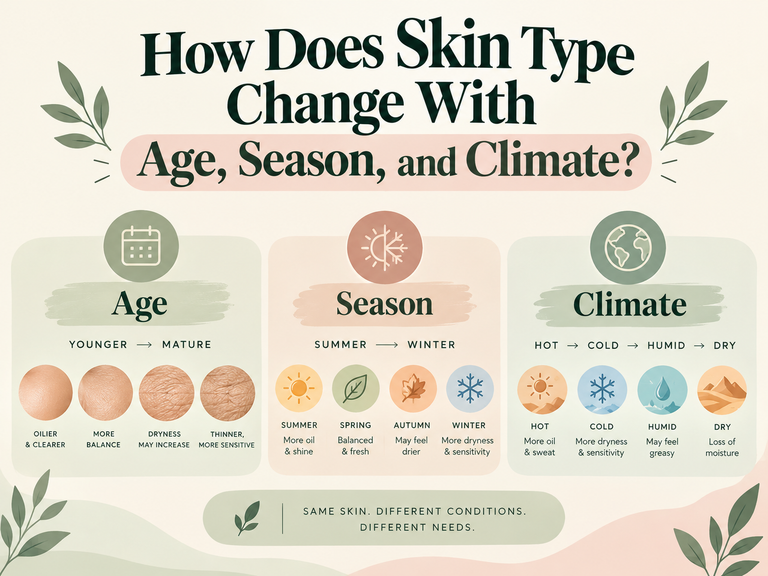
Seasons, Climate, and Indoor Air
The environment can change how your skin feels without changing your underlying oil tendency.
- Winter: Cold air, indoor heating, and hot showers can leave skin tight or rough.
- Summer: Heat and sweat can increase shine, and sun exposure can add dryness or irritation.
- Spring and autumn: Changing temperature, wind, and humidity may change comfort, though this is not automatic.
- Air conditioning and heating: The AAD is reported to note that air conditioning and heating can lower indoor humidity and dry skin.
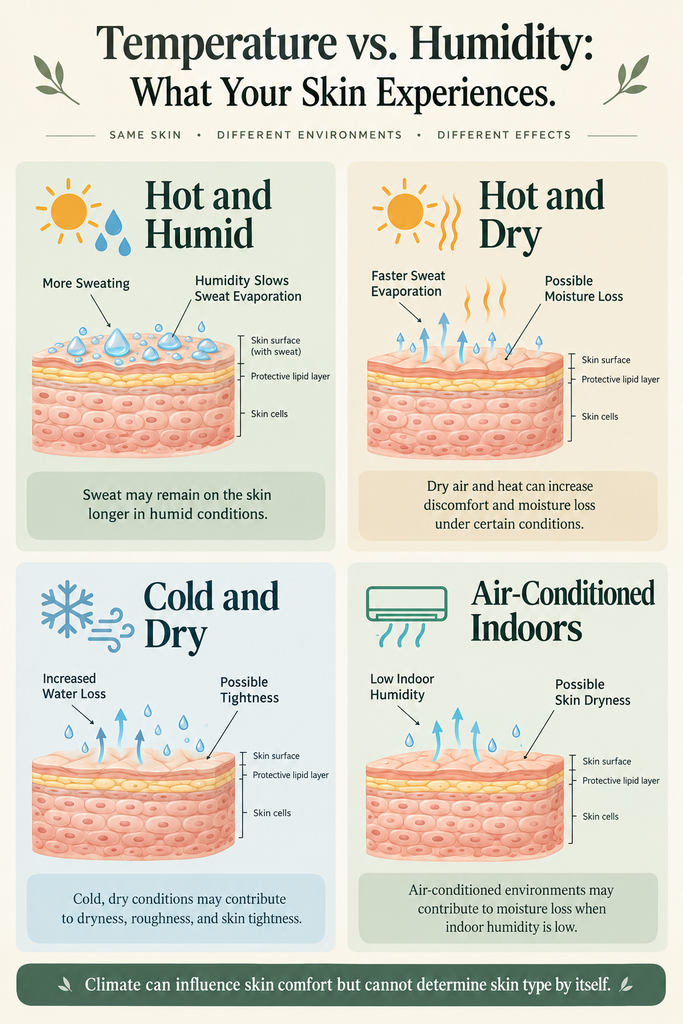
Humidity and temperature are not the same thing. Temperature is how hot or cold the air is. Humidity is how much water vapour it holds. A hot day can be humid or dry, and a cold day can be dry or damp. Skin may respond differently to each.
A humid climate does not automatically mean oily skin, and a dry climate does not automatically mean a dry skin type. Individual responses vary.
Table: Age, Season, and Climate
| Influence | What may happen | Important limitation |
| Age | Oil production and moisture retention may shift, for example, around puberty or later adulthood. | Not everyone changes at the same time or in the same way. |
| Season | Shine in hot weather, tightness in cold, dry weather | A seasonal change does not always mean your skin type has changed. |
| Climate | Humid, dry, windy, or cold conditions can change comfort. | Climate cannot diagnose a skin type. |
Table: Environmental Conditions
| Environmental condition | What someone may notice | Important limitation |
| Hot and humid | More sweat and surface shine | Humidity does not guarantee oily skin; skin can still feel tight if over-cleansed. |
| Hot and dry | Tightness, possible irritation, shine | Heat does not always mean dryness |
| Cold and dry | Rough, tight, or flaky skin | Not everyone’s skin gets dry in cold weather. |
| Air-conditioned indoors | Skin may feel tighter by evening. | Depends on time spent indoors and individual response |
| Indoor heating | Dryness, tightness | Hot showers and other habits may also contribute. |
Key takeaway: Weather and indoor air matter, but they are one factor among many. Treat them as clues, not diagnoses.
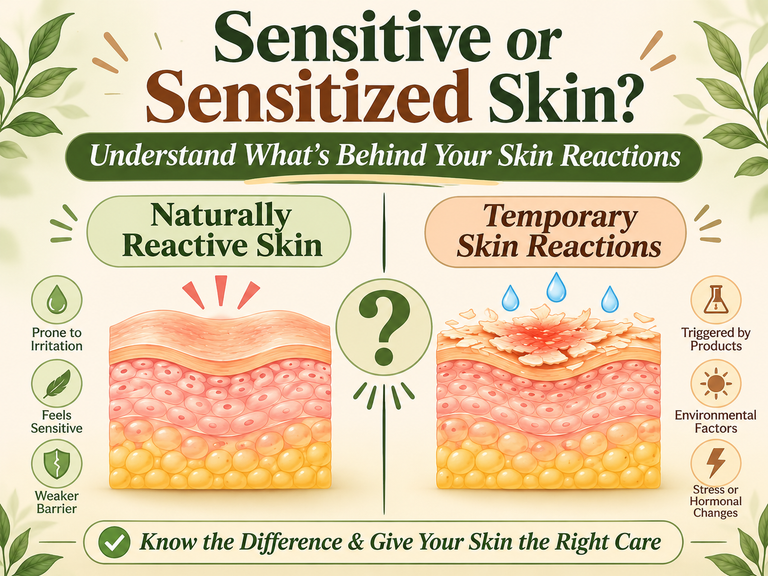
Skin Type vs Temporary Skin Condition
This distinction is the most useful one in the article.
| Question | Looks like a longer-term pattern | Looks like a temporary state |
| Shine | Shine returns in the same areas across seasons. | Shine appears only in a heatwave or after a heavy product. |
| Tightness | Tightness is constant even in comfortable conditions. | Tightness appears after cleansing or in dry indoor air. |
| Reactivity | Stinging or redness happens often with mild products. | Stinging started after a new product or over-exfoliation. |
| Facial areas | The T-zone is usually oilier than the cheeks | Differences appear only in certain weather. |
| Duration | Persists over many ordinary days and seasons | Improves when conditions or routine change |
Some points to remember:
- Tightness after cleansing does not automatically mean dry skin.
- Combination skin means different areas behave differently. A temporary difference in one weather condition does not always qualify.
- Persistent stinging, burning, or redness should not be written off as “just weather.”
Key takeaway: Look for patterns over several ordinary days and conditions, not one uncomfortable moment.
How to Observe Your Skin at Home
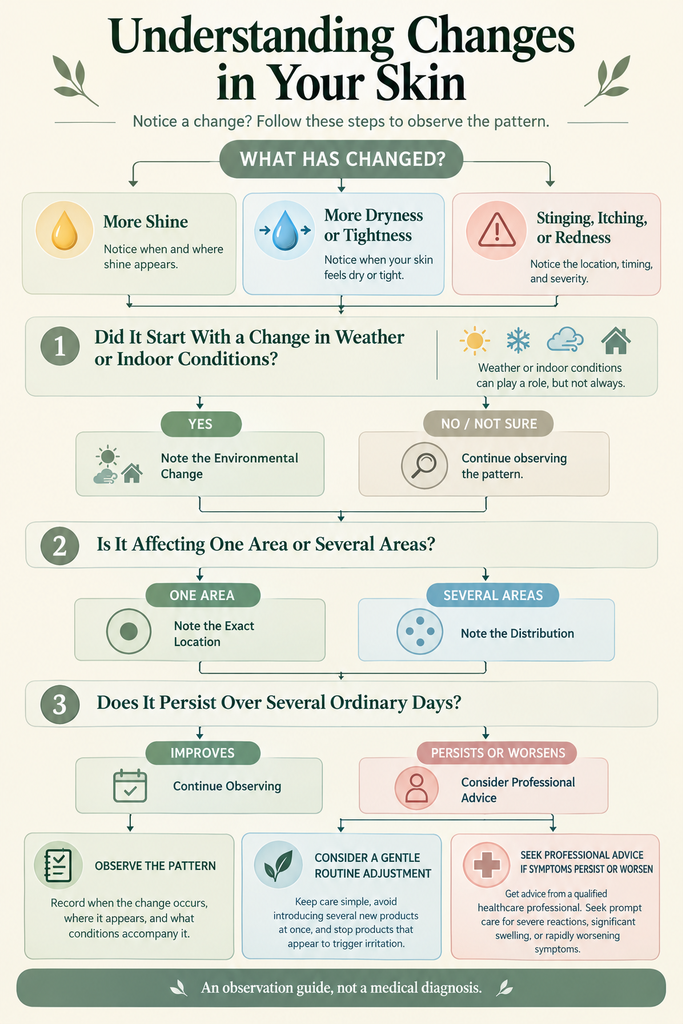
This is a low-cost, informal observation method. It is not a clinically validated test and cannot diagnose a skin disease.
- Start with an ordinary, comfortable routine.
- Look separately at your forehead, nose, chin, and cheeks.
- Note shine, tightness, roughness, flaking, stinging, or redness.
- Write down the conditions: hot, cold, humid, dry indoor air, a new product, and a change in routine.
- Compare several ordinary days instead of judging from one moment.
- Repeat when the season changes, without deliberately putting your skin in uncomfortable conditions.
Some sources describe a “pinch test,” where gently pinching a cheek shows wrinkling that may suggest dehydration. Dermatologists quoted in the media mention it, but it is informal and not a diagnosis. I would not rely on it.
Do not stop medically necessary treatments for this exercise, and do not keep using any product that irritates you.
Sample Observation Log
| Date | Weather or indoor conditions | Facial area | Shine or oiliness | Dryness or tightness | Irritation | Recent routine changes |
| Example: Day 1 | Hot, humid, outdoors | Forehead | Moderate | None | None | None |
| Example: Day 1 | Air-conditioned office | Cheeks | Low | Mild tightness by evening | None | None |
Key takeaway: After a week or two, you may see that shine and tightness are separate patterns that show up in different areas and conditions.
Adjusting Basic Skincare Without Overdoing It
These are general principles, not product recommendations. Individual tolerance varies.
- Gentle cleansing without over-washing. Over-cleansing can stress the barrier.
- Moisturize according to comfort. Oily skin can still need moisturizer. The AAD advises it for oily skin, and dermatologists also note that a moisturizer made for dry skin can hydrate without making skin too oily, while an oily one may cause breakouts. This is general guidance, and results vary.
- Humectants and occlusives. Humectants (such as hyaluronic acid, glycerin) attract water. Occlusives (such as petrolatum) help reduce water loss. Neither is necessary for everyone.
- Sun protection. Sun exposure can add dryness and irritation.
- Skip extra exfoliation when skin is irritated.
- Shorter, lukewarm showers may be gentler than hot ones.
- Think about indoor air. Some dermatology advice suggests a humidifier in dry indoor conditions.
- Adjust gradually. Avoid changing everything at once.
Climate-based ideas:
| Condition | General idea |
| Cold, dry | Gentler cleansing, comfort-focused moisturizing |
| Hot, humid | Lighter textures if heavy ones feel uncomfortable; don’t over-wash |
| Hot, dry | Watch for tightness; protect from sun |
| Air-conditioned | Notice if skin gets tighter later in the day |
Some sources also suggest that heavy oil-based products may not help dehydration as much as water-binding ingredients. This is a general idea, not a rule for every skin.
Six Practical Insights
1. The Two-Dimension Method. Rate oiliness and comfort/dryness separately. “Shiny but tight” is a more useful description than “oily”.
2. Environment vs Baseline. Compare your usual skin to how it behaves in a certain season. Example: the same person may be shinier in humid weather and tighter in dry, air-conditioned rooms. That does not necessarily mean two skin types.
3. Facial-Zone Strategy. The forehead, nose, chin, and cheeks may behave differently. Don’t classify the whole face from one spot.
4. One-Change-at-a-Time. If you change several habits at once, you won’t know which change helped or harmed.
5. Reassessment Strategy. Reassess after a season change, a move, or a persistent shift. Don’t change your routine for every daily fluctuation.
6. The Irritation Check. Burning, stinging, itching, or persistent redness should not automatically be treated as a normal seasonal effect or a permanent skin type.
Common Mistakes to Avoid
- Assuming oily skin can’t be dehydrated. It can. Check how skin feels, not just how it looks.
- Mixing up dehydration. Oil and water are different, so needs may differ.
- Confusing sweat with sebum. One is water and salts; the other is oil.
- Over-washing oily skin. It may irritate skin and trigger more oil, according to the AAD.
- Over-exfoliating. It may stress the barrier.
- Ignoring indoor air. Heating and air conditioning matter too.
- Blaming all redness on weather. Persistent irritation needs attention.
- Changing many products at once. It makes cause and effect unclear.
- Judging by one area. Zones differ.
- Assuming age or season alone decides your skin. Both are only influences.
- Treating home observation as a diagnosis. It is a self-observation aid only.
When to Seek Professional Advice
Consider seeing a qualified healthcare professional or dermatologist if you have:
- Persistent redness
- Burning or itching
- Painful inflammation
- Significant peeling
- A sudden, unexplained change that does not improve with gentle care
Home observations cannot diagnose eczema, rosacea, allergic contact dermatitis, or other conditions. Most changes are minor, but getting advice is reasonable if symptoms persist or worsen.
Frequently Asked Questions
1. What is the difference between oily skin and dehydrated skin?
Oily skin relates to oil (sebum) production. Dehydrated skin relates to water content in the outer layers.
2. Can oily skin be dehydrated?
Yes. Dermatologists quoted in the media say oily skin can have high oil and low water content.
3. Why is my skin shiny but tight?
Shine reflects surface oil, while tightness may reflect low water content or barrier stress. Over-cleansing, harsh products, and dry indoor air are possible contributors.
4. Is dehydrated skin a skin type?
It is usually described as a temporary state or condition, though some sources use the term differently.
5. Does dry skin mean dehydrated skin?
Not exactly. Dry skin means lower oil; dehydrated means lower water. They can overlap.
6. Can humid weather make skin look oilier?
It may increase shine for some people, but responses vary.
7. Can skin type change with the seasons?
Skin may feel different across seasons, but this does not always mean the underlying type has changed.
8. How can I tell if a change is temporary?
Track it over several ordinary days and different conditions. If it improves with gentle routine changes, it may be temporary.
9. How often should I reassess?
Mainly when seasons change or if you notice a lasting shift, not daily.
10. When should I see a dermatologist?
If you have persistent redness, burning, itching, painful inflammation, or significant peeling.
Conclusion
Oily and dehydrated describe different things: oil production on one side, water content on the other. Shine does not rule out dehydration, and tightness does not prove dryness. Observe patterns over time, separate oiliness from comfort, consider weather and indoor conditions, and adjust gradually. A temporary change in how your skin feels does not automatically mean its underlying type has changed.