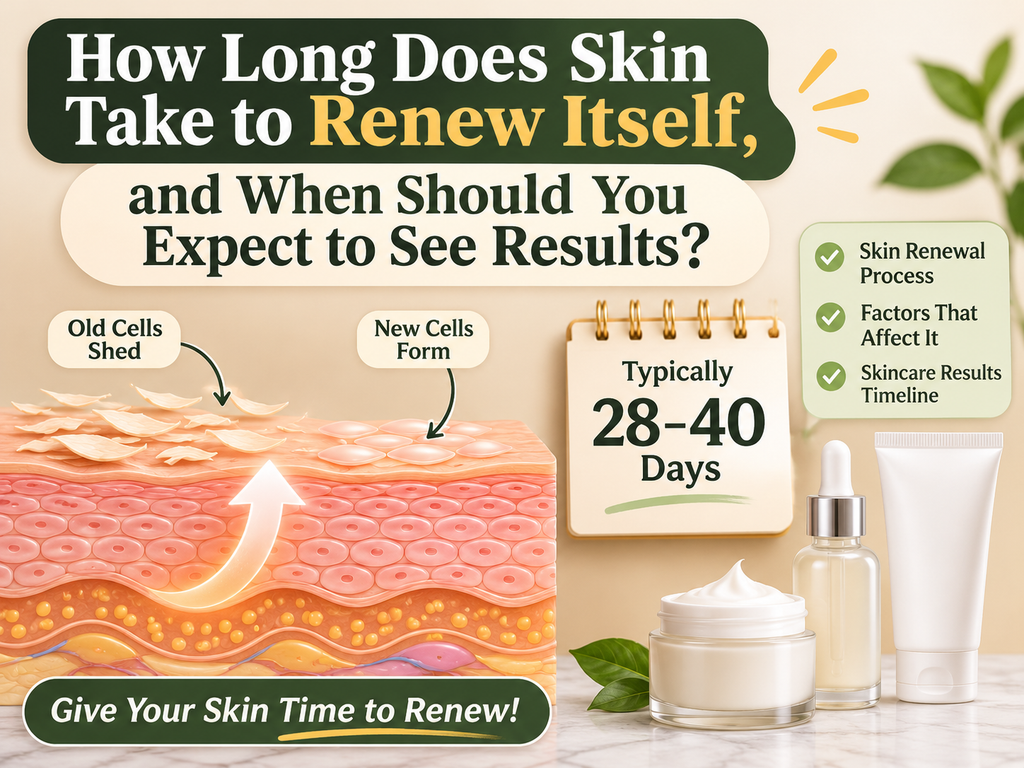
Short answer: The outer layer of skin typically renews itself about every four weeks in young adults. The cycle tends to lengthen with age and varies from person to person. Visible results often take longer than one cycle, because skin concerns like acne, uneven tone, and fine lines involve more than the surface. For many routine changes, a fair trial is about 4 to 12 weeks, and some concerns take several months.
You started a new routine. Why Is Nothing Happening?
It is day four of a new routine. The mirror looks the same, and a friend says their results appeared overnight. It is tempting to switch products or add three more.
Often the issue is not the routine but the timeline. Skin renews on a schedule that is slower than most of us expect. This article explains how renewal works, why age and lifestyle change the timing, and what a realistic results timeline looks like. It is general education, not medical advice.
How Skin Renews Itself
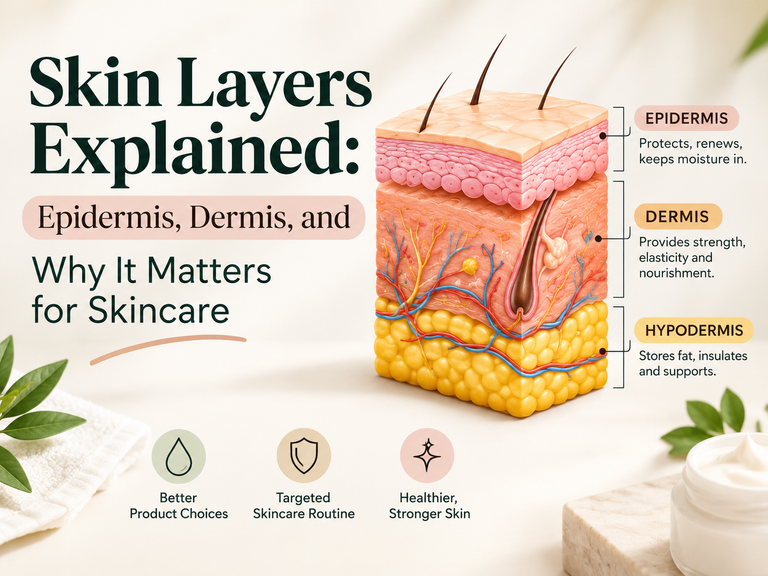
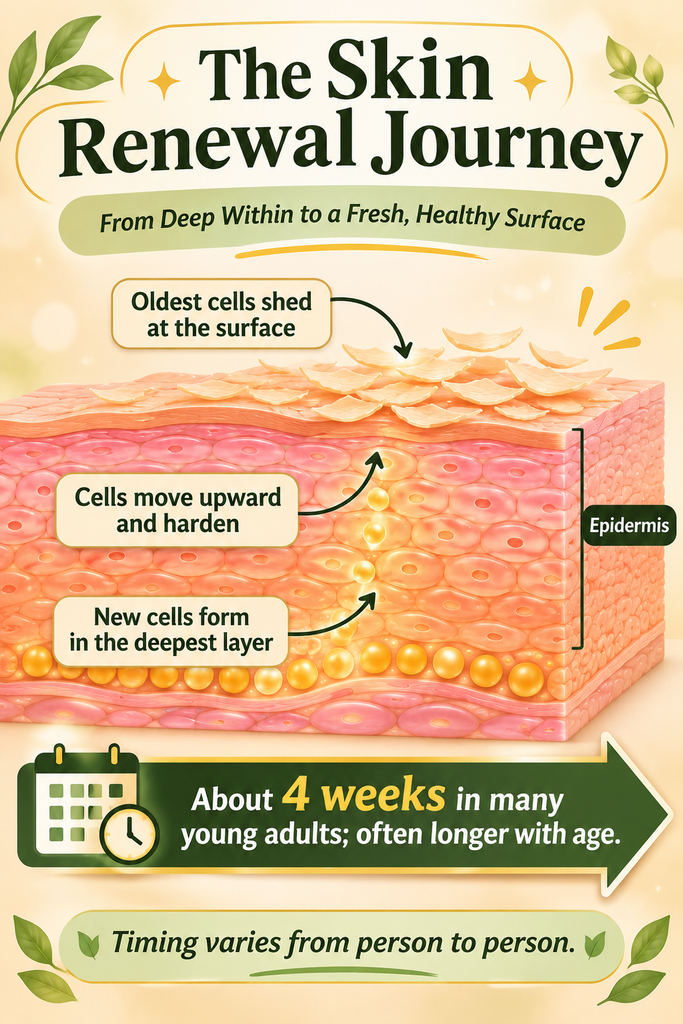
Your skin has several layers. The outermost is the epidermis, which acts as a waterproof barrier. Below it lies the dermis, which holds collagen and elastin.
Renewal in the epidermis works like a slow conveyor belt. New cells form in the deepest part of the epidermis and gradually move upward. As they rise, they flatten and harden, forming the outer layer, called the stratum corneum. At the surface, the oldest cells shed naturally. Reviews describe that the full journey from basal cell to shed surface cell takes about 28 days on average in young adults.
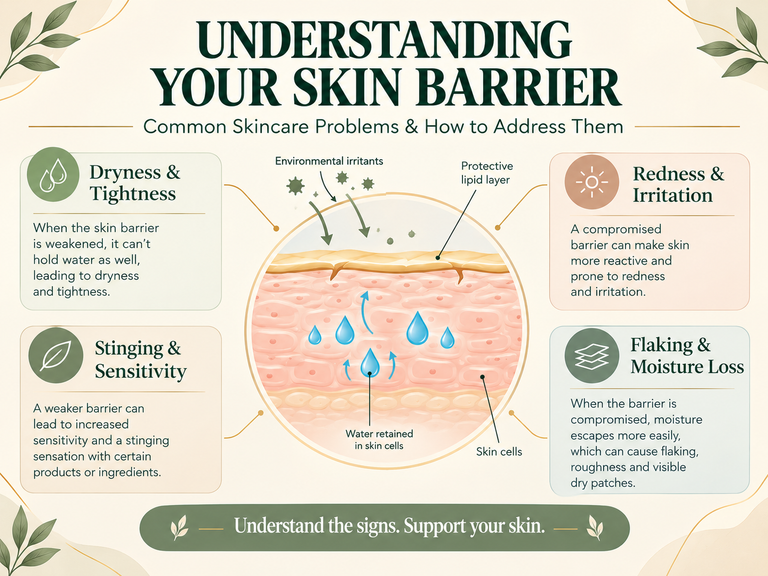
The skin barrier is that outer protective layer that helps reduce water loss and protect against irritants. It is part of this renewal process, which is why barrier problems can take time to settle.
Is It Really 28 Days?
The “28-day skin cycle” is a widely quoted figure, but treat it as an approximate average, not a rule. Several things to keep in mind:
- Studies measure it in different ways, and reported numbers vary between sources. One summary describes cells taking about 19.8 days to transit the epidermis in people aged 18 to 29, with the time increasing in older groups.
- Another consumer health source reports that for most adults under 50 the cycle is between 28 and 42 days and that for people over 50 it may stretch to as long as 84 days, though it varies.
- Figures for babies and teenagers also differ by source.
So the honest answer is “around a month for many younger adults, often longer later in life”. Some brand websites present exact numbers per age as facts. I would treat those as rough illustrations.
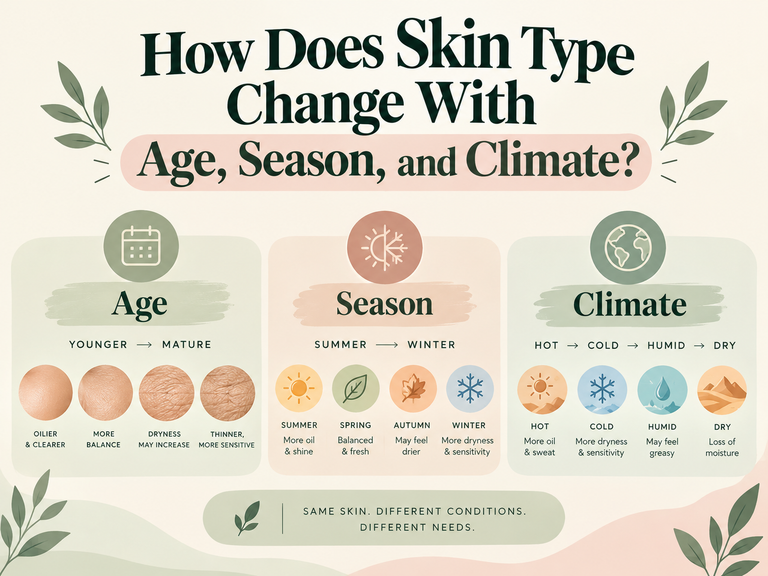
How Age Changes the Cycle
| Life stage | General trend | Important limitation |
|---|---|---|
| Childhood | Skin renews relatively quickly | Reported numbers vary by source. |
| Teens and young adults | Often described as around 4 weeks or less | Individual variation is large. |
| Middle adulthood | The cycle often lengthens. | Lifestyle and sun exposure also matter. |
| 50 and older | Can take noticeably longer; some sources say up to 12 weeks | Not everyone is affected equally. |
Key takeaway: Aging slows renewal but does not stop it. Aging slows skin regeneration, but it never stops it completely. So the same routine may show results faster for one person than another.
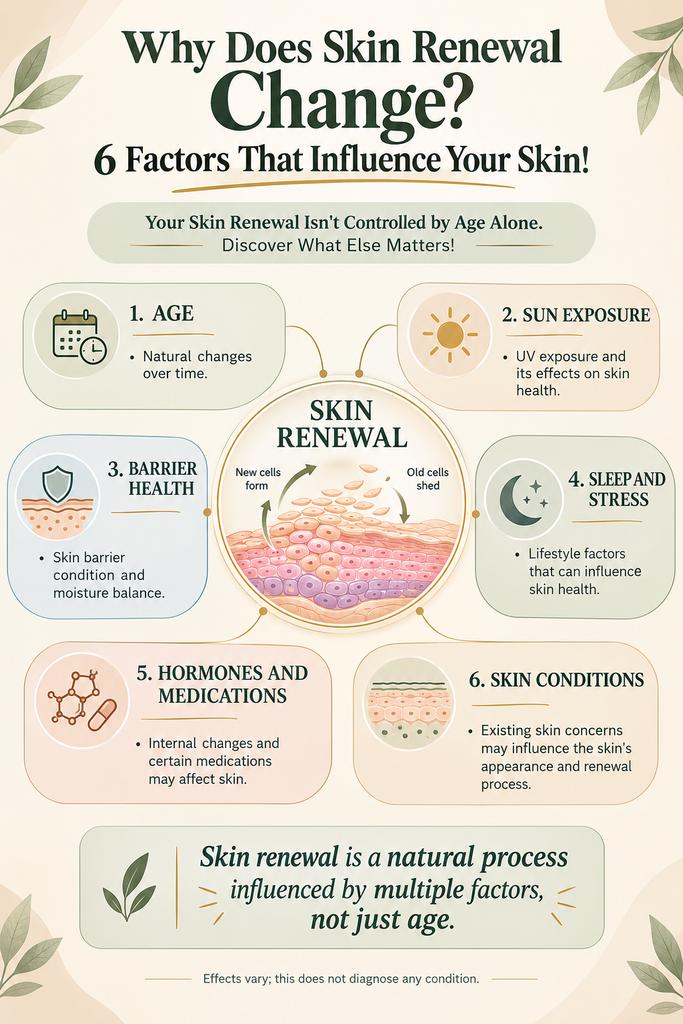
What Else Affects Renewal Speed?
Age is only one factor. These may also influence how skin looks and behaves:
- Sun exposure. Ultraviolet (UV) light can damage skin cells and affect skin health. Some brand sources claim it diverts cells toward repair and slows renewal, but I treat that as plausible rather than precisely measured.
- Sleep, stress, and nutrition. These affect general health, and some sources link them to skin recovery. The strength of evidence for exact effects on turnover varies.
- Smoking, illness, hormones, and medications. Some of these may change how skin looks and heals.
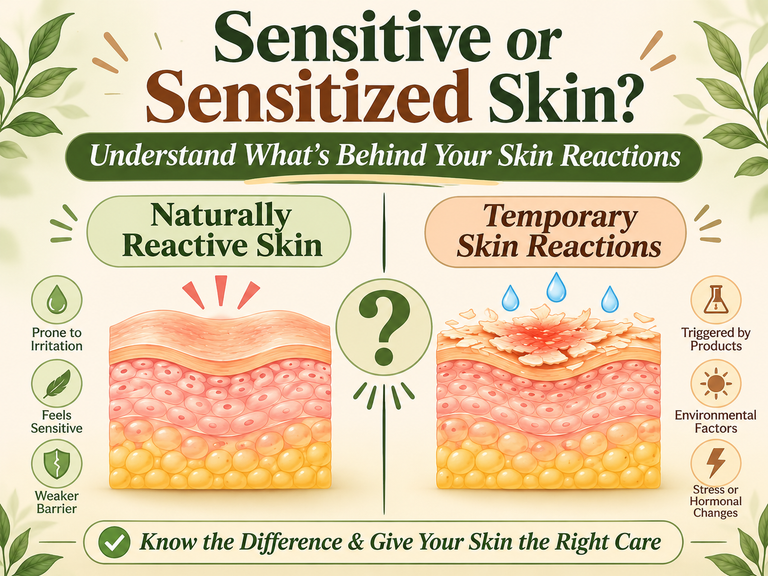
- Barrier damage. Over-exfoliating or using irritating products can leave skin feeling raw, which can look like “slow renewal” even when the underlying cause is irritation.
- Skin conditions. Some conditions involve unusually fast turnover. For example, psoriasis has been described as involving cells reaching the surface in as little as a few days. Fast does not mean healthier here.
None of these is a verdict on your skin. They are things to consider.
Why Results Take Longer Than One Cycle
This is the part most articles skip. Even if the surface renews in about a month, many concerns do not live only on the surface:
- Acne involves oil, clogged pores, bacteria, and inflammation that develop below the surface.
- Dark spots and uneven tone involve pigment that may sit deeper and fade slowly.
- Fine lines and firmness relate to collagen and structure in the dermis, which change slowly.
- Scars involve bigger changes that may only partly improve.
Think of the cycle like repainting a wall: the top coat can look fresh quickly, but fixing the plaster underneath takes much longer.
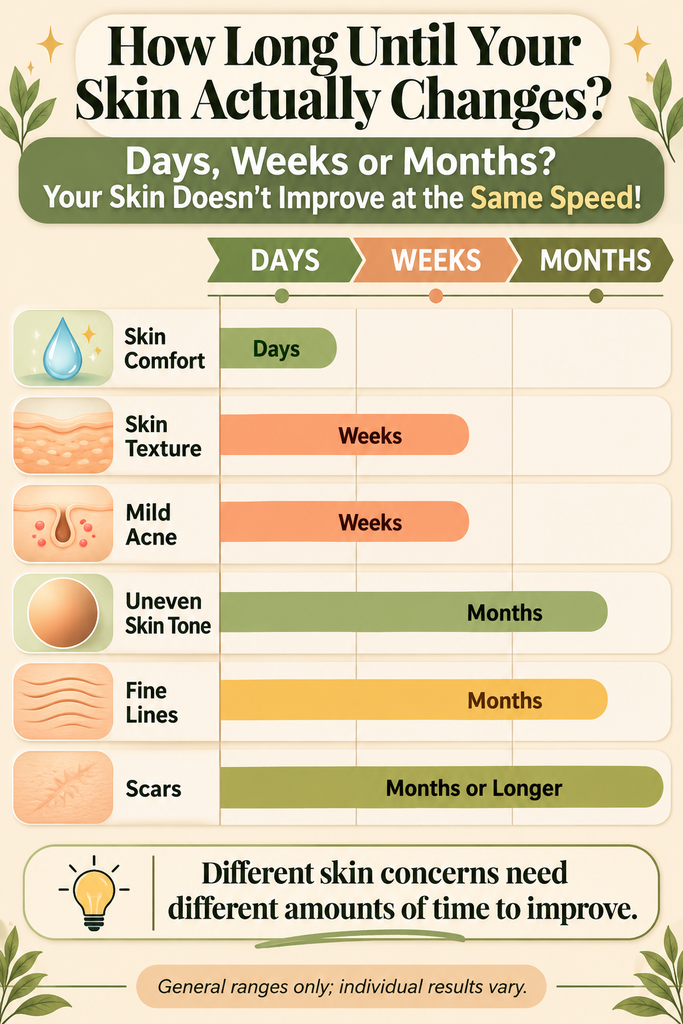
A Realistic Results Timeline
Remember that these are general ranges, not guarantees. Timing depends on the concern, the product or treatment, your skin, and how consistently and safely you follow a plan.
| Comfort and tightness (barrier support, gentler cleansing) | Days to 2 weeks | 2 to 4 weeks | Depends on what caused the tightness |
| Dullness and rough texture | 2 to 4 weeks | 4 to 8 weeks | Over-exfoliating can make it worse. |
| Mild acne with a suitable routine | A few weeks | 8 to 12 weeks | Persistent or painful acne needs professional advice |
| Uneven tone or dark spots | Several weeks | 3 to 6 months or longer | Sun protection matters; some marks are slow |
| Fine lines and sun-damaged skin | Several weeks to months | 3 to 6 months or longer | Results are usually gradual and vary |
| Scars | Months | Often longer | Often only partial improvement |
For prescription-strength retinoids, one medically reviewed source reports that some people notice acne improvement as early as 2 weeks; it often takes 6 to 12 weeks for full benefit, and improvements in wrinkles and sun damage typically take 3 to 6 months. A dermatologist or pharmacist can tell you what applies to your specific treatment.
Key takeaway: Do not judge a routine on day five. Also do not wait indefinitely. If nothing has improved after a fair trial period for your concern, that is a good moment to ask a professional rather than keep guessing.
The “Gets Worse Before It Gets Better” Question
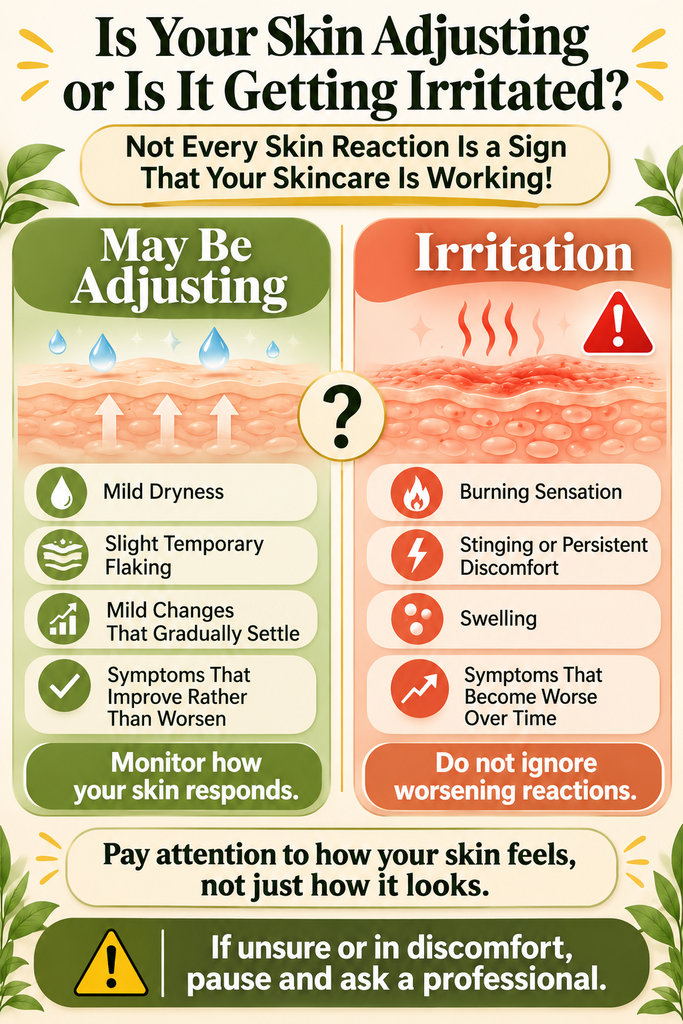
Some active treatments can cause dryness, peeling, or temporary breakouts in the first weeks. Sources often call this an adjustment period. A drug-information source describes that retinoid use can make skin look worse, with redness, flakiness, and peeling, for several weeks. Online, people call temporary breakouts “purging.”
The tricky part is that adjustment, irritation, and a bad reaction can look alike. Guessing wrong in either direction has costs.
| Sign | May suggest a temporary adjustment | May suggest irritation or a poor fit |
|---|---|---|
| Timing | Early weeks, then settles | Gets worse or keeps going |
| Location | Areas where you usually break out | New areas, or all over |
| Feeling | Mild dryness or tightness | Burning, stinging, or swelling |
| Duration | Improves over a few weeks | Not improving after several weeks |
Key takeaway: Mild, short-lived dryness may be part of adjusting. Burning, stinging, swelling, or worsening symptoms are a reason to pause and speak to a professional. Never keep using something that hurts just because it might be “purging.”
How to Track Your Progress Without Fooling Yourself
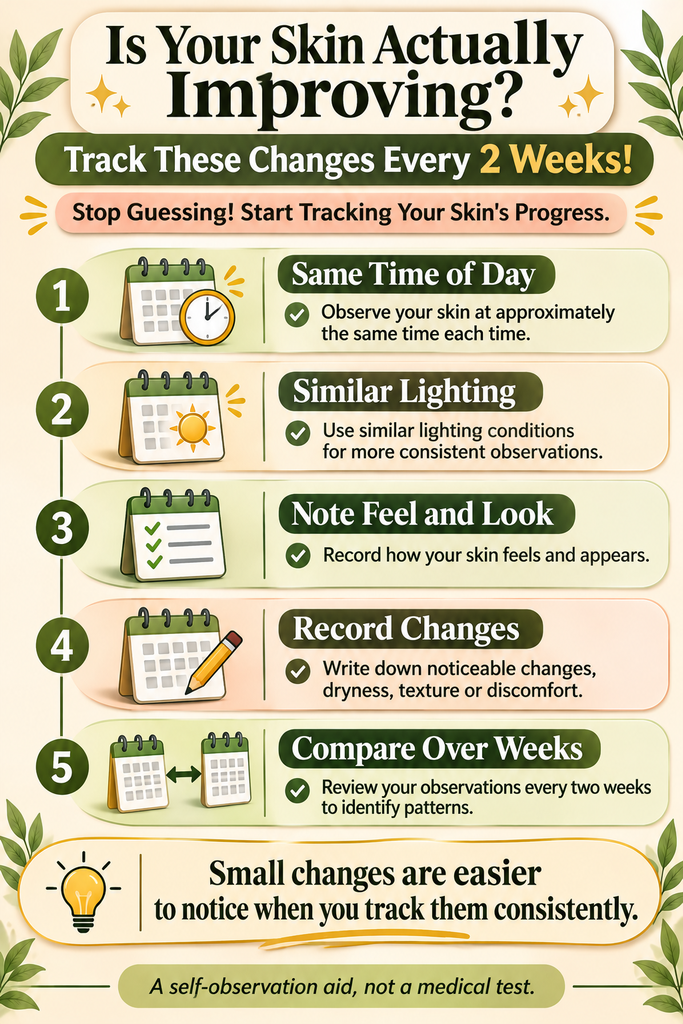
Memory is a poor judge of slow change. A simple log helps.
- Pick a consistent time of day and similar lighting.
- Note how your skin feels (tight, rough, oily) and how it looks (shine, redness, dullness).
- Record your routine and any changes.
- Check in every 2 weeks, not every day.
- Judge across several ordinary days rather than one moment.
- If you take photos, use the same light and distance, and keep them private.
Sample Progress Log
| Date | What I changed | Skin comfort | Appearance | Irritation | Notes |
|---|---|---|---|---|---|
| Week 0 | Started new routine | Tight in the evening | Dull | None | Baseline |
| Week 2 | No new changes | Slightly better | Same | Mild dryness | Checking in |
| Week 4 | No new changes |
This is a self-observation tool, not a clinically validated test. Do not stop medically necessary treatment because of a log.
Key takeaway: A log shows trends you would otherwise miss, and it stops you from changing products every few days.
Habits That Support Healthy Renewal
These are general principles, not product recommendations, and individual tolerance varies.
- Be gentle. Cleanse without scrubbing, and avoid very hot water.
- Moisturize according to comfort. A well-functioning barrier supports a comfortable complexion.
- Use sun protection. Sun exposure affects skin health and can undo progress.
- Exfoliate sparingly, if at all. Some sources suggest regular exfoliation helps with build-up, and others warn about overdoing it. The right amount varies, and irritated skin usually needs less.
- Change one thing at a time. One source makes the point that a new product needs about as long as your skin renewal cycle to judge, and longer if your cycle is slower.
- Look after the basics. Sleep, balanced meals, and not smoking support general health. I would not promise a specific effect on your skin.
Common Mistakes to Avoid
- Judging too early. A few days is not enough for most goals.
- Waiting forever. If there is no improvement after a fair period, ask a professional.
- Changing products every week. You can’t tell what is working.
- Using too many actives at once. More steps can mean more irritation.
- Over-exfoliating to “speed up” renewal. It can damage the barrier and slow comfort.
- Ignoring sunscreen. Sun exposure can work against your goals.
- Assuming one timeline fits everyone. Age, skin type, and the concern all matter.
- Confusing irritation with purging. Burning is not something to tough out.
- Comparing yourself to edited photos. Online results often reflect lighting, filters, or different concerns.
- Expecting skin to stay perfect. Renewal is continuous, and so is care.
When to See a Professional
Consider a qualified healthcare professional or dermatologist if you have:
- Persistent redness, burning, itching, or painful inflammation
- Significant peeling or swelling
- Acne that is painful, scarring, or not improving after a fair trial
- A mole or spot that changes in size, shape, or colour
- A sudden change that doesn’t improve with gentle care
Home observation cannot diagnose a skin condition. This is a prompt to get advice, not a reason to worry.
Frequently Asked Questions
1. How long does it take skin to renew itself?
Commonly, about 4 weeks in young adults, often longer with age. Individual timing varies.
2. Does skin renew faster when I’m young?
Generally, yes. The cycle tends to lengthen with age, but it varies.
3. When will I see results from a new skincare routine?
Comfort may improve within days to weeks. Texture often takes 4 to 8 weeks. Acne, tone, and fine lines may take longer.
4. How long should I try a new product before giving up?
For many non-irritating routines, about 4 to 12 weeks, depending on the goal. Stop sooner if you have burning, stinging, or swelling.
5. Can I speed up skin renewal?
Some treatments change how quickly skin sheds, but faster is not always better, and over-doing it can irritate skin. A dermatologist can advise.
6. What is skin purging?
A term for temporary breakouts when starting certain actives. It is hard to tell apart from irritation, so seek advice if unsure.
7. How long does skin take to heal after irritation?
It depends on the cause and severity. Mild irritation may settle within days to a couple of weeks once the trigger is removed, but not always.
8. How long do dark spots take to fade?
Often months, and some may not fade fully. Sun protection helps prevent them from darkening.
9. Does a 28-day cycle mean new skin every month?
Only the outer layer renews on this cycle. Deeper concerns take longer.
10. When should I see a dermatologist?
If symptoms persist, worsen, hurt, or don’t improve after a fair trial.
Conclusion
Skin does renew itself continuously, but that does not make it fast. The surface may refresh in about a month, and deeper concerns can take several months. Age, sun, irritation, and consistency all change the timeline. Pick a simple routine, change one thing at a time, track your skin every couple of weeks, and be patient but not stubborn. If your skin stings, burns, or isn’t improving after a fair trial, a professional can help more than another new product.