You’ve used the same face wash for three years. Then one Tuesday, it stings. Your cheeks feel hot, your moisturizer suddenly burns, and a routine that never gave you trouble now feels like a mistake.
So what happened? Did your skin change, or did something you did to it change it?
That question matters more than it sounds. The answer decides whether you should stay calm and simplify, change one habit, or see a professional. Most articles lump everything under “sensitive skin.” This one separates what’s built into you from what’s been done to you.
The Short Answer
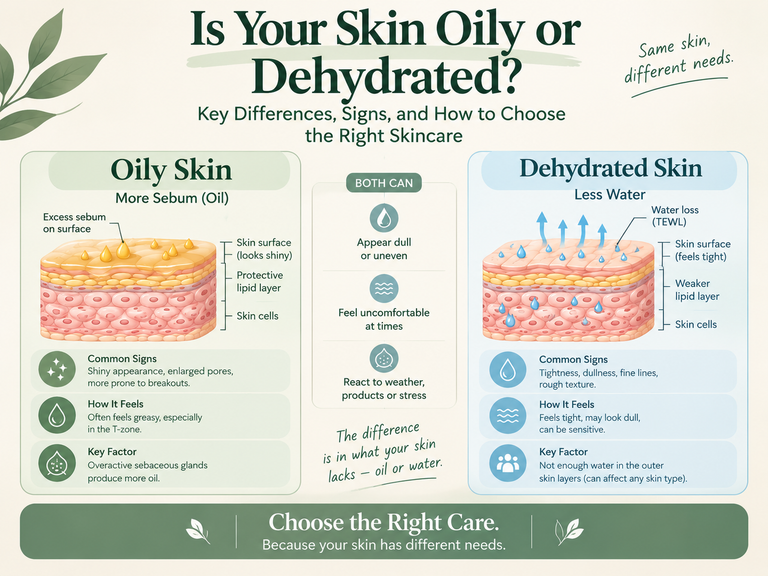
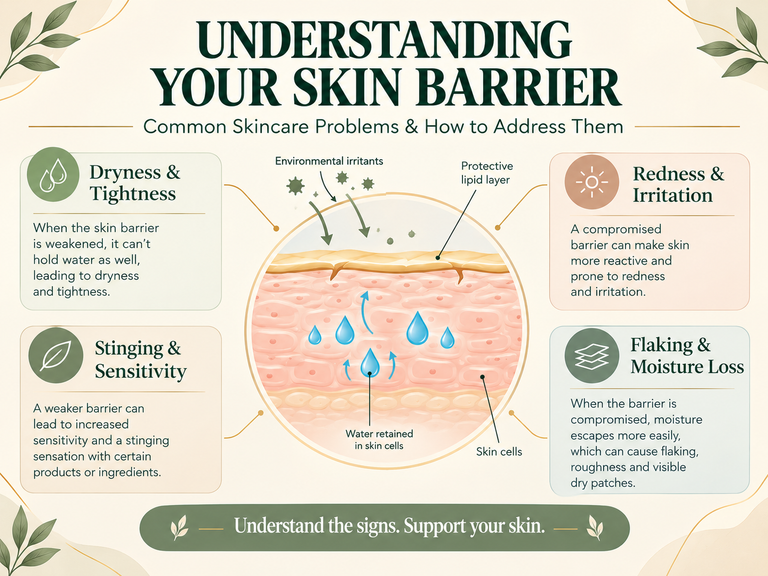
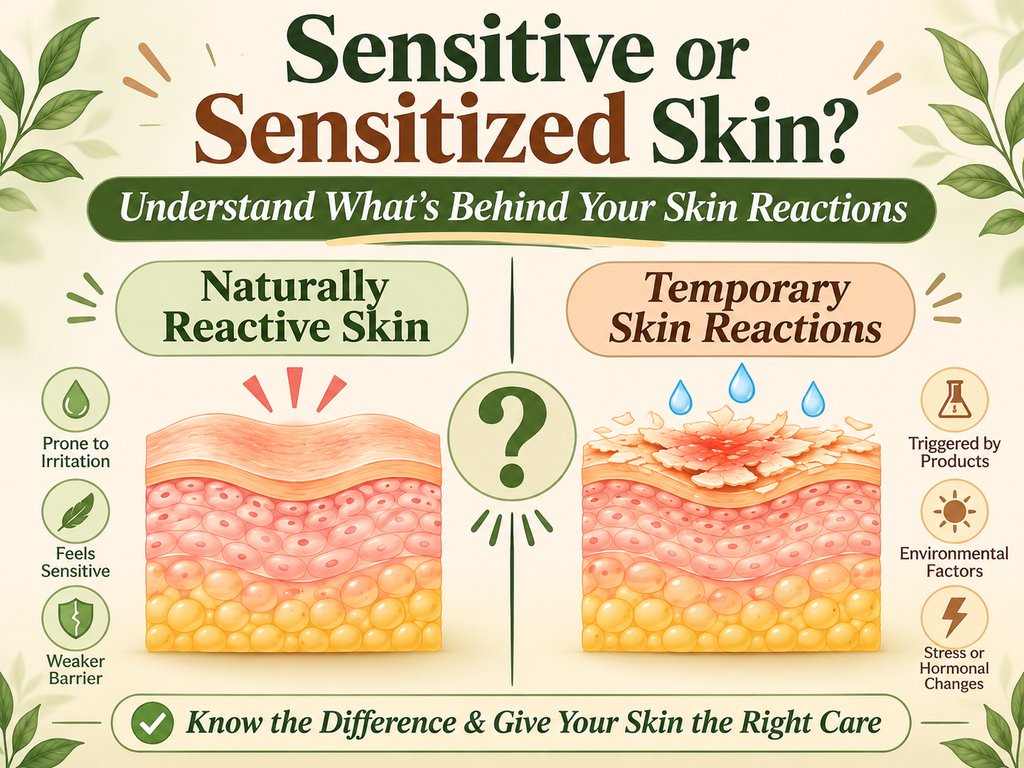
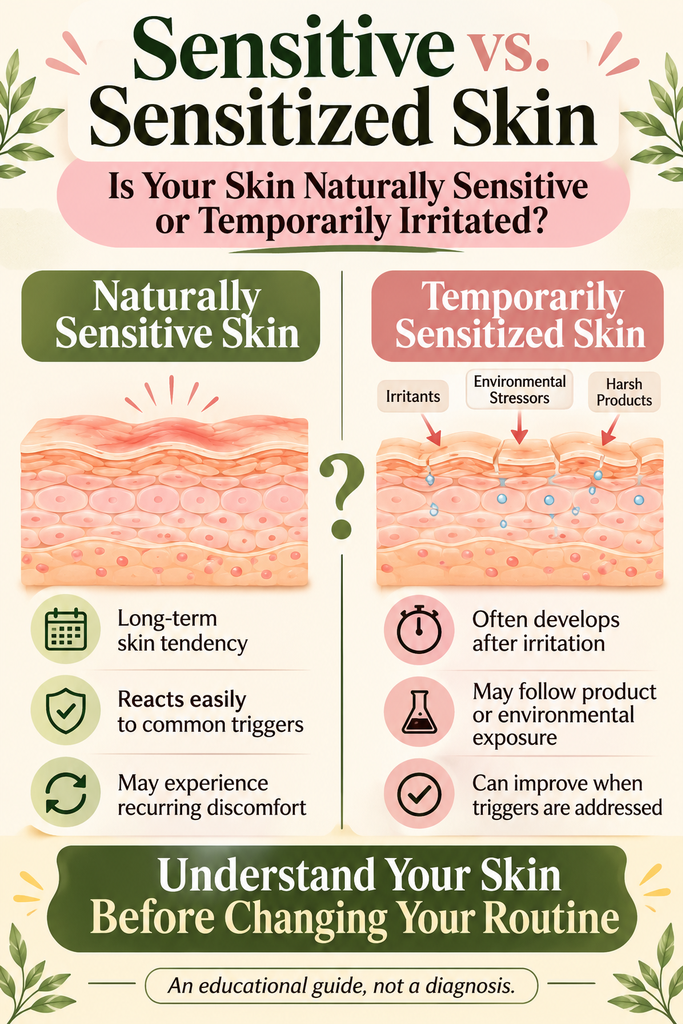
Sensitive skin is a longer-lasting tendency to react with stinging, burning, itching, or tightness to things that wouldn’t bother most people. Sensitized skin is a popular, informal term for skin that has become more reactive recently, usually because the outer barrier has been stressed by things like harsh products, over-exfoliation, weather, or friction.
The two can overlap, and you can’t reliably tell them apart from one bad day. You can often get a good idea by looking at timing, location, triggers, and whether things settle when you simplify your routine.
What “Sensitive Skin” Actually Means
Sensitive skin isn’t a skin type like oily or dry, and it isn’t a formal diagnosis either. An international group of dermatology experts, using a structured consensus process, defined it as a syndrome marked by unpleasant sensations such as stinging, burning, pain, itching, and tingling in response to stimuli that normally shouldn’t cause them. The same definition notes that the skin can look normal or show redness.
Two details in that definition are easy to miss.
First, visible redness isn’t required. The experts debated including it and concluded that although redness is traditionally linked to sensitive skin, it isn’t compulsory. Your skin can look perfectly fine while feeling awful.
Second, it’s largely about sensation. A later study described it as a mostly subjective syndrome, which is why it’s mainly assessed through interviews. There’s no blood test or scan for it.
It’s also common. One consensus paper reports that roughly 60–70% of women and 50–60% of men describe themselves as having sensitive skin. That figure is self-reported, so it reflects how people feel, not clinical measurement. Still, if your skin often feels reactive, you’re far from alone.
What People Mean by “Sensitized Skin”
Here’s where I want to be honest. “Sensitized skin” is mainly a term used in skincare education and the cosmetic industry. It isn’t a formal medical diagnosis. The closest medical ideas are a stressed or disrupted skin barrier and irritant contact dermatitis (more on that below). I’m using the word because it’s useful: it describes skin that became reactive, as opposed to skin that has always leaned that way.
Think of it like a worn path across a lawn. Some lawns are naturally thin (sensitive). Others were fine until people kept walking the same route (sensitized). Same bare patch, different story.
| Sensitive skin | Sensitized skin (informal term) | |
|---|---|---|
| Pattern over time | Reactions recur across months or years | Reactions began recently, often after a specific change |
| Typical cause | Individual tendency, sometimes linked to other conditions | Barrier stress from products, habits, or environment |
| Triggers | May react to varied stimuli, such as temperature, wind, or some products | Often tied to something identifiable, such as a new active or frequent scrubbing |
| Does it improve? | May ease with care but tends to return | Often calms when the stressor is removed, though not always quickly |
| Medical status | Described by an expert definition, not a disease | Informal label, not a diagnosis |
Key takeaway: The difference is mostly about history and cause, not about how it feels in the moment. Both can sting. Only the timeline and triggers tell them apart.
How Skin Gets Sensitized
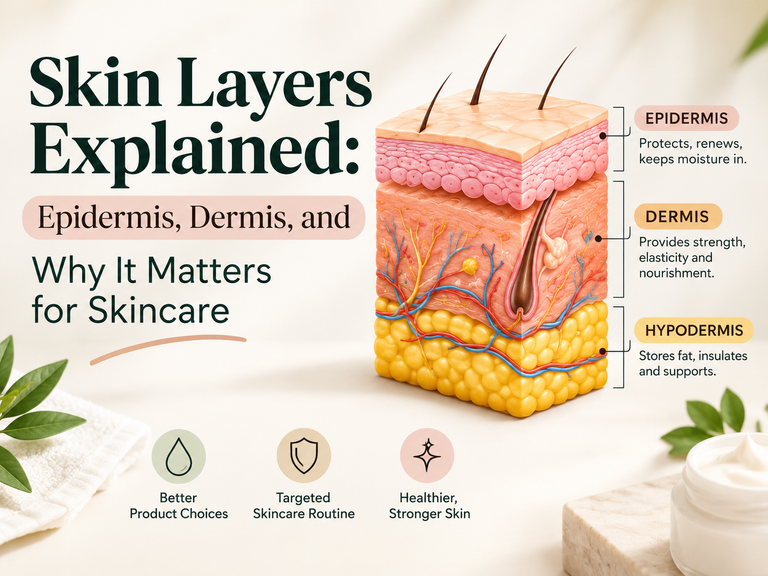
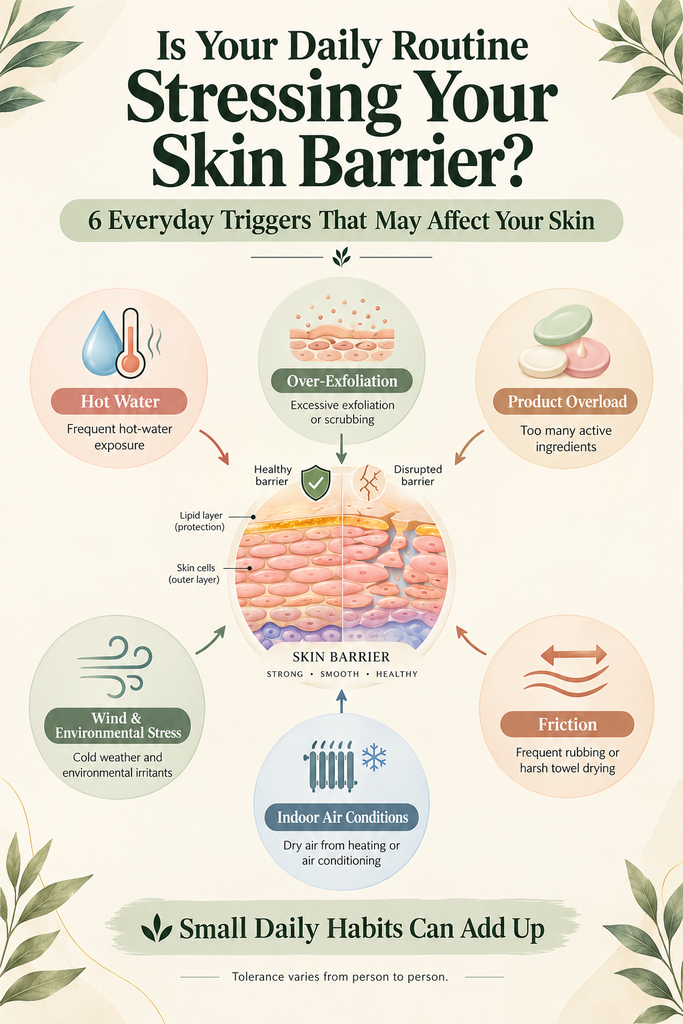
Your skin’s outer layer works like a wall. It helps keep water in and irritants out. When that wall is stressed, things you’d normally tolerate can start to sting. Common contributors include:
- Over-cleansing. Washing several times a day, or using very hot water, strips away surface oils.
- Too much exfoliation. Scrubs, peels, and brushes used often or in combination can wear skin down faster than it recovers.
- Stacking active products. Introducing several strong products at once, or layering many, raises the odds of irritation.
- Fragrance and other irritating ingredients. Tolerance varies a lot between people.
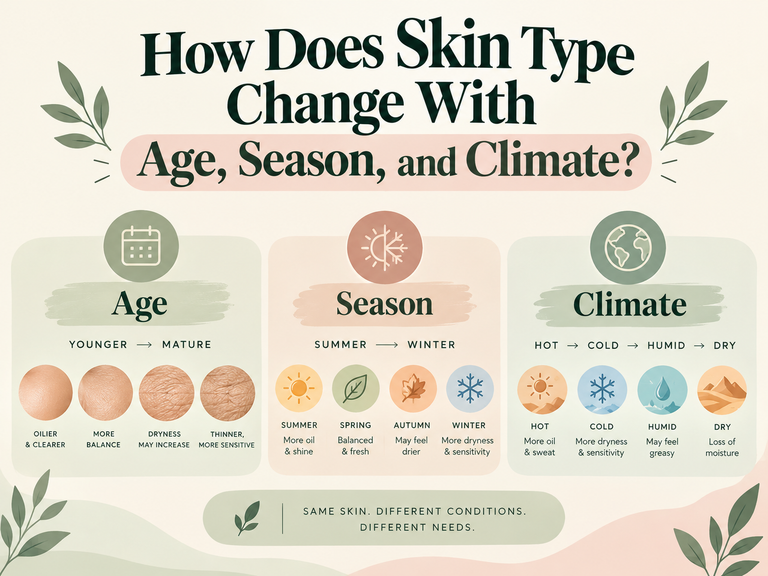
- Weather and indoor air. Cold wind, dry heating, strong sun, and heavy air conditioning can all add stress.
- Friction. Rubbing with towels, masks, or hands is more significant than people expect.
None of these is guaranteed to harm you. What matters is the combination and frequency, and your own tolerance.
Irritation vs. Allergy: A Distinction That Changes Everything
Not every reaction is the same kind of reaction. Dermatology generally splits reactions to substances touching the skin (contact dermatitis) into two main types.
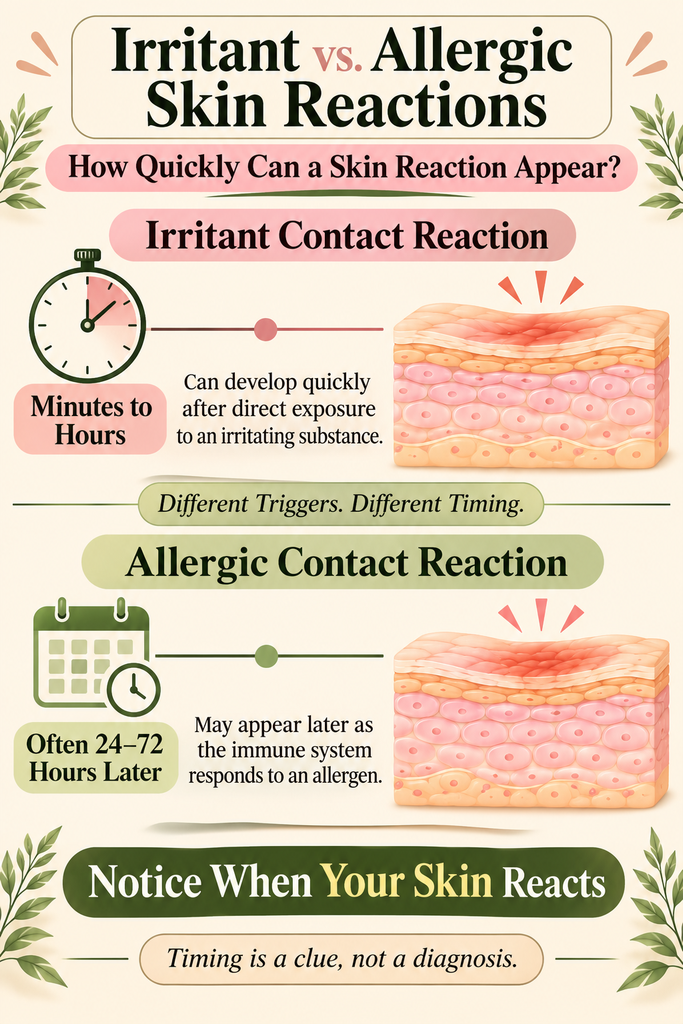
Irritant contact dermatitis happens when a substance directly damages or irritates the skin. The American Contact Dermatitis Society explains that it occurs in response to irritating substances like harsh soaps, and the skin can react within minutes or hours. A medical review estimates it accounts for about 80 percent of contact dermatitis.
Allergic contact dermatitis involves the immune system. The same society describes it as an immune response to something you’re allergic to, such as fragrances or preservatives. A dermatology specialist describes it as usually an itchy, pinkish, flaky rash that typically appears a day or two after exposure.
This is why timing is such a valuable clue. A product that burns immediately points one way. A rash that blooms a day or two later points another. Neither is a diagnosis on its own, but the pattern helps you and a professional ask better questions.
One caution: telling the two apart isn’t always easy, even for specialists. Patch testing performed by a clinician is one of the tools used to confirm which type it is.
When It Isn’t Sensitivity at All
Sometimes what looks like “sensitive skin” is something else wearing its coat. A review in Frontiers in Medicine notes that some people with stinging sensations have underlying conditions such as rosacea or seborrheic dermatitis, which can be mistaken for sensitive skin.
Eczema (atopic dermatitis) can also tangle with product reactions. This matters because the right response differs. A routine tweak might help sensitized skin, while an underlying condition often needs professional assessment. Home observation can’t sort that out for you.
Play Detective: Five Questions That Narrow It Down
You don’t need special equipment. Ask yourself:
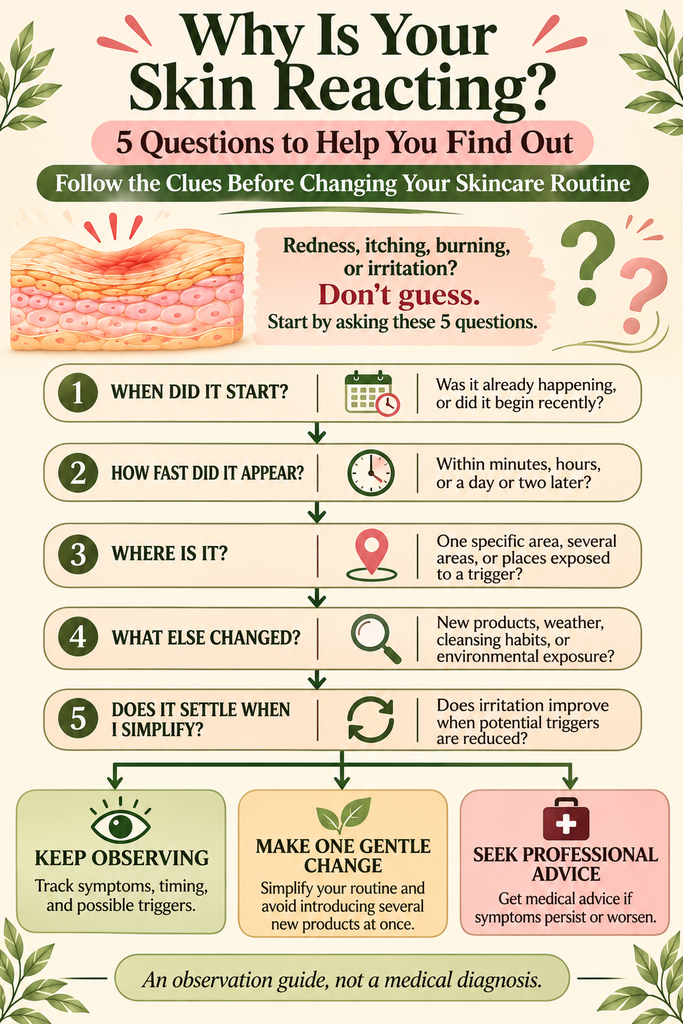
- When did it start? A sudden change after a new product or routine shift points toward sensitization. A lifelong pattern points toward baseline sensitivity.
- How fast did it appear? Immediate stinging and next-day rash suggest different mechanisms.
- Where is it? Reactions limited to where a product touched are informative. Spread across the face, or on the body too, suggests a wider cause.
- What else changed? Weather, travel, new laundry products, heating, or a new habit all count.
- Does it settle when you simplify? If skin calms noticeably after a gentle, minimal routine, stress on the barrier is a plausible contributor.
A Simple Reaction Log
Try this for about two weeks. It’s a self-observation aid, not a validated diagnostic test.
| Date | What I used or did | When symptoms appeared | Where on the face | What I felt (sting, burn, itch, tight) | Visible changes | Other changes (weather, indoor air, new product) |
|---|---|---|---|---|---|---|
Key takeaway: One bad day tells you very little. A pattern across several days tells you much more.
A Gentle Reset: General Principles, Not a Prescription
If you suspect your skin is stressed, these are the general ideas dermatology-minded educators commonly emphasize. They’re principles, not product recommendations, and individual tolerance varies.
- Simplify first. Cleanse gently, moisturize for comfort, and use sun protection suited to you. Pause extra actives while skin is irritated.
- Change one thing at a time. If you add or remove several things at once, you’ll never know which one mattered.
- Be wary of “fragrance-free” assumptions. Labels like “unscented” can still involve scent-related ingredients, so reading ingredient lists is more reliable than slogans.
- Introduce new products gradually. A small patch trial on a limited area can be a rough early check, though it isn’t a substitute for clinical patch testing.
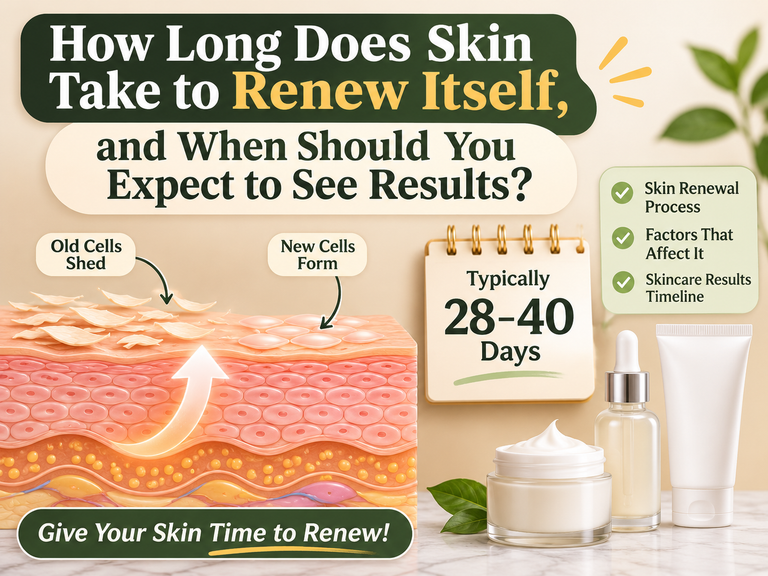
- Give recovery time. Barrier-stressed skin often needs days to weeks, not hours. If it isn’t improving, that itself is useful information.
Please don’t stop a prescribed treatment because of anything you read here. And if something burns or keeps irritating, don’t keep using it hoping your skin will “adjust.”
Five Less Obvious Insights
1. Sensation and appearance are different dimensions. Because sensitive skin is defined by sensations, you can have significant stinging with little visible redness. Don’t dismiss symptoms just because the mirror looks fine.
2. “It’s just my skin type” can hide a fixable cause. Labeling yourself as permanently sensitive can stop you from asking what changed recently. Ask the history question first.
3. “It’s just a reaction” can hide a persistent pattern. The opposite error is equally real. Repeated reactions over months may deserve a closer look.
4. Your environment is part of your routine. Heating, air conditioning, wind, and hot showers all affect skin. They just don’t appear on any ingredient list.
5. Reassess on a schedule, not on impulse. Review your notes after a season change or a new product, rather than rewriting your routine after every uncomfortable afternoon.
Common Mistakes to Avoid
- Treating every reaction as a permanent skin type. Check recent changes first.
- Treating every reaction as temporary. If it keeps returning, track it and consider professional input.
- Changing many products at once. You lose the ability to identify the cause.
- Over-exfoliating “because it feels rough.” Roughness from irritation can be worsened by more scrubbing.
- Over-washing oily-feeling skin. Stripping can leave skin more uncomfortable, not less.
- Assuming natural means gentle. “Natural” isn’t a safety category, and plant-derived ingredients can irritate or cause allergies.
- Ignoring the environment. Dry indoor air or strong wind can mimic a product problem.
- Blaming weather for every burn. Persistent stinging or redness deserves a proper look.
- Using a home log as a diagnosis. It helps you describe patterns, not name a condition.
- Pushing through burning. Discomfort that stays is a signal, not a toughness test.
When to Seek Professional Advice
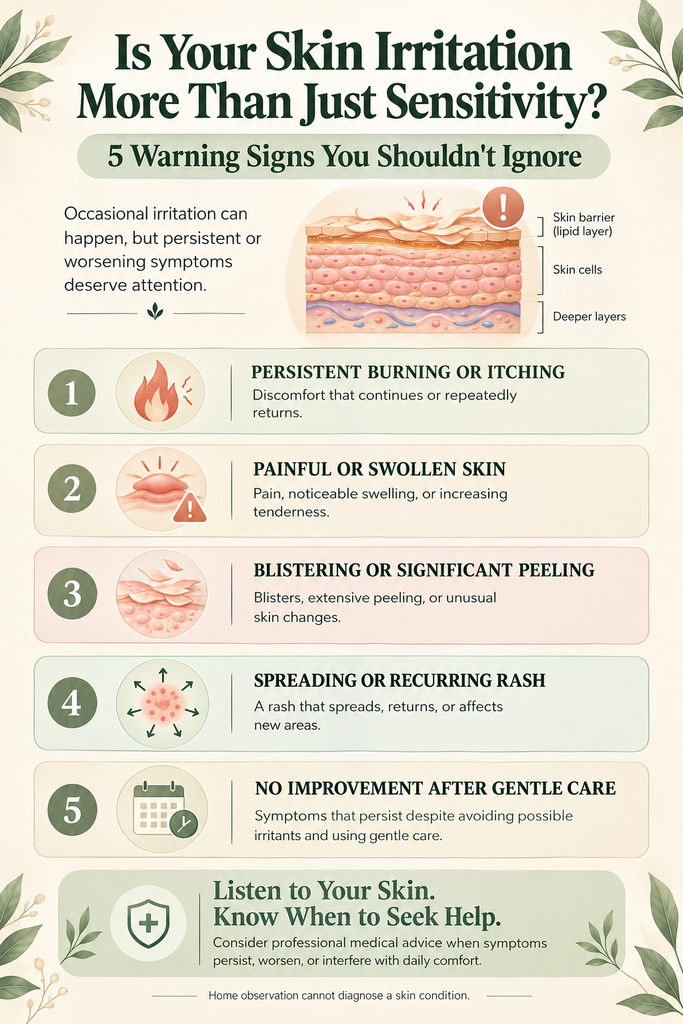
A qualified healthcare professional or dermatologist can help if you notice:
- Burning, itching, or redness that persists or keeps getting worse
- Painful inflammation, swelling, blistering, or significant peeling
- A rash that spreads or keeps coming back
- Reactions that don’t settle after you’ve simplified your routine
- A sudden unexplained change that doesn’t improve with gentle care
Home observations can’t diagnose eczema, rosacea, seborrheic dermatitis, or allergic contact dermatitis. If an allergy is suspected, a clinician can use patch testing, along with your history and symptoms, to identify the cause. Bringing your reaction log makes that appointment far more productive.
Frequently Asked Questions
1. What’s the difference between sensitive and sensitized skin?
Sensitive skin is a longer-lasting tendency to react. Sensitized skin is an informal term for skin that became reactive recently, usually after barrier stress.
2. Can sensitized skin become sensitive skin?
There’s no strong evidence that settles this either way. Repeated irritation could plausibly keep skin reactive for longer, but individual outcomes vary.
3. Does sensitive skin always look red?
No. Experts note that redness isn’t compulsory, and skin can look normal while feeling uncomfortable.
4. How long does it take for stressed skin to recover?
It varies by person and cause. Often days to weeks with gentle care. If there’s no improvement, consider professional advice.
5. Can I be allergic to a product I’ve used for years?
Yes. Allergic reactions can develop after repeated exposure, which is one reason a “reliable” product can suddenly cause trouble.
6. Is stinging always a bad sign?
Occasional mild sensations can happen, but burning or stinging that is intense or keeps recurring shouldn’t be ignored.
7. Is a home patch test enough?
It’s an informal early check at best. It can’t confirm or rule out an allergy the way clinical patch testing can.
8. Do I need to throw out all my products?
Not necessarily. Pausing extras and reintroducing one at a time is usually more informative than discarding everything.
9. Can weather alone cause sensitized skin?
It can add stress, especially cold, dry, windy, or heavily heated or air-conditioned conditions, but it’s rarely the only factor.
10. When should I see a dermatologist?
When symptoms persist, worsen, spread, or are painful, or when you can’t find a pattern after careful observation.
The Takeaway
Your skin reacting doesn’t automatically define you. Sometimes it’s a built-in tendency. Sometimes it’s a recent stress you can trace and ease. Often it’s a mix.
So don’t start by asking, “What’s wrong with my skin?” Ask, “What changed, how fast, and where?” Write it down, change one thing at a time, and give your skin room to answer. That question will take you further than any label.